›

Running a company in Canada needs planning, careful work, and good choices. But many business owners do not think about using life insurance. Having the right life insurance can do more than protect your family members. It can also help keep your business cash flow stable, cover loans, and protect your business partners and the future of the company. This guide talks about life insurance for a business owner in Canada using easy words. You will learn what your options are and find it easier to ask good questions before you get a policy.

Every business owner in Canada will face risks beside the usual sales and bills. If something happens to you, your company could deal with stress from banks, partners, your staff, or even family members. This is the reason that life insurance should be in your business plan and not only for your own needs.
A life insurance policy can give you fast cash when your business needs it most. It can help cover business debts, help with who owns the company, and let your team keep things running. Next, we will talk more about why this is so important to Canadian entrepreneurs and their companies.
Many small business owners have more risk than they think. You might be the main seller, make every big choice, sign for loans, or be the one your clients trust. If you die without warning, the small business can lose money and have no clear path forward. A life insurance policy helps with that hard moment.
The death benefit gives your company some help and lets it breathe. It can give your business time to pay back loans, pay for a buyout, keep up with payroll, or meet the contract while people get used to the new normal. This makes life insurance one of the best ways to keep a small business running and to protect its money.
This kind of insurance works with other plans too. Many small business owners mix life insurance, critical illness insurance, or even disability insurance. This covers different problems that may come up. Not every business needs the same things, but the main thing is clear: protection for the people and the small business which need you.
Life insurance is important for people who are self-employed, run an incorporated business, are partners, or hold shares in a company. This type of coverage helps protect your own money and can also keep your business going if something unexpected happens.
Key person insurance is good to have because it keeps your business safe if one of the main people is lost. For partners and shareholders, buy-sell agreement insurance makes it easier to handle changes in the business, which supports business continuity.
Having life insurance and key person insurance gives you peace of mind. You can then work on your business and not worry about what would happen to your family or business needs if something happens to you. If you need more help, talking to a licensed insurance advisor will help you get the right coverage for your situation.
If you do not have coverage, a quick and unexpected death can bring stress to your business and family right away. Bills will keep coming in. Lenders might still want their payments on time. Workers could start to worry about losing their jobs. If you are a business owner and you do not have life insurance, even a good company can get into serious problems that could have been avoided.
Common risks include:
These problems can hurt your financial security without much warning. Life insurance can help by giving a lump sum that keeps things steady. That money can help take care of your business debts, steady the cash flow, help a business owner or their family ease into the next steps, and let people take their time instead of making rushed choices about business expense, succession, or estate planning.

Canadian owners often think about two types of life insurance. These are term life and permanent life insurance. The best life insurance for you will depend on what you want, how much you want to spend, and how long you need it. Some businesses look for life insurance that is affordable and gives short-term safety. Some want life insurance that lasts for all your life and also helps with things like estate planning.
Term life insurance is good for when you have loans, when you are just starting your company, or for deals that do not last for long. Permanent life insurance can help if you want to plan for later years, pass things on to others, or grow company money for the long term. Let’s look at these types of life insurance one by one. We will then talk about term vs whole life insurance in Canada using simple words.
Term life insurance will cover you for a set number of years, like 10, 20, or even 30. Many business owners pick this type of insurance first because you get a high coverage amount without paying too much each month. For a lot of small businesses, term life is a good place to start.
This type of insurance is used for short-term business needs. You might get it to help with a business loan, make a shareholder agreement, or cover a time when your company counts on your income. Lower premiums mean you can keep more money in your cash flow and still have good protection if something happens while the coverage lasts.
A lot of owners go with term life insurance company options when they want affordable business insurance Canada and want their plan to be easy to understand. It works well as life insurance for small business owners, people who are self-employed, and companies that are just starting out. If your needs go on for more years, you may want to look at permanent coverage as another type of insurance.
Permanent life insurance is made to last your whole life if you keep paying for it. The two main kinds are whole life insurance and universal life. This type of insurance is something a business owner may want if they need lifetime coverage, help with estate planning, or support for long-term plans in their company.
Whole life insurance comes with steady payments and steady cash value growth. If you look at universal life insurance, it gives you lifetime coverage but offers more room to choose how you use the investment options inside the policy. That can be a good thing for people who want more say in how things work. Still, it can have more parts to manage.
If your company has been around a while, permanent life insurance can build a corporate asset because of its cash value. Many in Canada use it in corporate owned life insurance Canada, succession planning, and executive life insurance Canada. But it does cost more than most types of term coverage. So, it is important to have a reason or goal in mind before you choose this.
Choosing between term life insurance and permanent life insurance comes down to timing, budget, and purpose. A business owner who needs loan protection for 10 years may choose term. Someone focused on estate planning or corporate liquidity may prefer permanent coverage.
Here is a simple comparison:
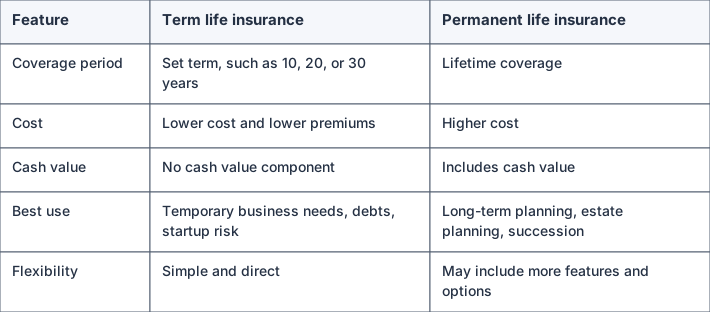
In short, term is often best for affordable protection now, while permanent coverage may suit business continuation insurance Canada and long-range goals. If you are weighing term to 100 life insurance Canada or whole life, your business needs should lead the decision.

Some businesses rely a lot on just one person. This might be the founder, the best salesperson, the main technician, or a senior leader. If something happens to that key person, it can hurt the company’s revenue, lender trust, and the way clients see the business. That is why key person insurance Canada is important.
So, what is key person insurance? It is a type of insurance policy the business owns for someone very important in the company. The death benefit from this policy goes to the company, not to their family. It helps keep the business strong if there is a tough change. Now, let’s see how this protection works in real life.
When a key person in a company dies, it is not just about the emotional impact. The business may lose sales, important skills, and strong direction. A life insurance policy on the key person can give the company cash when it needs it most. This helps keep the business running while the team finds someone new to fill that role.
The payout may help the business:
This is why key person insurance is used a lot by new businesses, companies where experts lead teams, and businesses that need skilled workers. If your company counts on one or a few key people, this kind of life insurance can help stop big problems. It will not fix every issue, but it can give you more time and some much-needed space when things are tough.
Imagine a bakery owner who must be there every day to run the company. She has to pay for things like equipment loans, a credit line, and the staff each week. If something happens to her, key person insurance can step in. The death benefit could help cover business debts and keep the bakery open while her family decides what comes next.
Or think of a tech business that relies on one founder who knows all the right people and knows the products well. If that founder is not there, a key person insurance payout could help the company:
These examples highlight the main use of key person insurance. It gives a business owner more than just money. It gives time to deal with financial obligations, keep up important connections, and not have to make quick choices that could hurt the value of the business.
Yes, in many cases, your Canadian business can own and pay for your life insurance policy. This way of setting things up is called corporate-owned life insurance. Incorporated business owners often use it. They use it when they want life insurance, to help with business planning, succession, or to make a tax plan for the company.
With corporate-owned life insurance, the business is usually the owner and also the one who will get the money if something happens. So, the company has control of the life insurance policy and gets the payout. In the next two sections, we will talk about how this works and why some business owners pick this way instead of buying a policy for themselves.
Corporate-owned life insurance is a type of policy that a company owns. It covers the life of a business owner or someone else tied to the company. The company pays for the policy. If the insured person dies, the company gets the death benefit. People often use this setup to help with business needs, not just family support.
In Canada, there is something called the capital dividend account. When a company gets a death benefit, any amount over what the policy cost can go into this account. This makes it possible to send out tax-free capital dividends to shareholders, if things are done the right way.
Many use this plan for business succession, debt protection, or when making long-term business plans. There are many life insurance providers that offer these types of policies, but it's important to look at what is best for your setup and the goals of your business. You should talk to a life insurance expert or other professional before you decide.
A business owner might want to know if they should keep life insurance in their own name or put it in the corporation. There is no one right answer for everyone. Life insurance owned by a company can help with business plans. A personal policy is often easier. It may also work better if you want to protect your family only.
Corporate ownership may give some good things, such as:
A personal policy is often easier to deal with and may be better to hold if you think your business will change one day. Each situation is different. This is not legal or tax advice. To see what works best, talk with your insurance advisor, accountant, or lawyer. They can help you look at your specific situation before you pick a personal policy or let your business own it.
If your company has more than one owner, life insurance can help keep things safe for everyone. Shareholders and partners need a plan for what will happen if one owner dies. Without money ready, a buy-sell plan can be hard to do quickly and in a fair way.
A life insurance policy, when set up right, can give the money needed to buy the share of the business that belonged to the owner who passed away. This helps stop fights, makes succession planning smoother, and lets the people left in the business keep control. Now, let’s see how buy-sell funding works in a simple way.
Buy-sell agreements tell what happens to an owner’s share of the business if they die. But having the agreement is not enough on its own. The other owners or a business partner need enough money to buy the share. This is where buy sell agreement insurance Canada can help.
A life insurance policy can cover this need. When one owner dies, the policy’s cash helps others:
How does buy sell insurance work? In short, it puts the money in place for a buyout. The coverage amount is usually based on debt, what the business is worth, and how much each owner has. People in smaller or family companies may call this buy sell life insurance Canada or partnership life insurance Canada.
Business succession is not just about who takes over next. It is also about having the right money, picking the best time, and making sure it is fair. Life insurance can help a business owner make money available. That way, ownership can change hands without hurting the company’s daily work.
This is true in family businesses too. Sometimes, one child works in the company and another one does not. Insurance can help with estate planning by giving all children a fair share and still keep the business strong. It can also help a surviving partner keep the company, so they do not have to borrow a lot of money just to stay in charge.
For many companies, this is a key reason for business succession insurance Canada and business continuation insurance Canada. The goal of all this is simple. It keeps the company’s value safe and helps owners, heirs, and workers get through a tough time.
Many people in Canada who own businesses sign for loans, lines of credit, or equipment financing themselves. If the owner who was insured passes away, the lender may look at or ask for their money faster. This can put a lot of stress on both the business and the owner’s estate. Having a life insurance policy can lower this risk.
With business loan protection insurance, the money from the death benefit can be used to pay off or back up a business loan. Sometimes, a collateral assignment is set up to help with borrowing. Next, you will see how this plan works and why it helps to keep business credit safe.
Life insurance can help with a business loan in two ways. If the main owner with the policy dies, the death benefit can be used to pay off business debts. Some policies also let a business use collateral assignment. This means the policy is given to a lender so the business can borrow money.
This can help if a business has:
Permanent coverage adds more options because the cash value can be used for long-term planning. Some owners use cash value for collateral assignment or to give themselves more choices later. Still, the main reason to have life insurance here is to make sure lenders get paid and to lower stress on the business if a key person dies when not expected.
Strong business credit often comes from staying steady. If the founder passes away, banks can worry about getting the money back, who will lead, and how much will come into the company. Having a life insurance policy can show the bank that the company has a backup plan with money ready. This can stop things from falling apart when the leader changes.
If you are a business owner, this still matters even if the loan is easy to handle. People often worry most about short-term confidence. The money from life insurance can help the business keep up with bills, keep working with suppliers, and keep up income replacement until the company gets back on its feet or brings in new leadership.
This is why business insurance for entrepreneurs Canada often includes ways to protect from debt. And, it shows why some owners talk to a business insurance advisor Canada about both loans and life insurance coverage at the same time. A good plan takes care of more than just debt. It also protects the company's name.
To sum up, knowing about the different types of life insurance for business owners in Canada is important. This helps keep your business safe for the future. When you look at key person insurance, corporate-owned plans, or buy-sell agreements, you see each can help your business stay strong during hard times. Getting enough life insurance helps protect your money, your loved ones, your workers, and your partners. Don’t risk your business by waiting—it’s smart to talk with a skilled advisor about your insurance needs. This will help you to deal with the different choices. Want to move forward? Get quotes now and find peace of mind for your business.
Either option can work. A business owner in Canada can pick a personal policy for family needs, or they can get corporate-owned life insurance for their business plans. Corporate-owned life insurance may help with money needs and passing on the business. A personal policy is often more simple. The way your company is set up and your goals will help you decide what to get.
There can be some tax benefits with life insurance. If a company owns a life insurance policy, the death benefit paid to the company is usually tax-free. In some cases, a part of this payout goes into the capital dividend account. This account could help the company pay tax-free capital dividends to shareholders. It is good to get advice from a professional before you count on this plan.
The best coverage amount for a business owner depends on their debts, buy-sell needs, how much money they bring in, and other financial obligations. Many people add up what is owed and then include a few years of the business’s worth or the owner’s role in making money. A life insurance calculator can show you an idea of what to get. Still, advice made for your situation is also important when choosing life insurance.

Cindy David, CFP, CLU, FEA, TEP, is President & Estate Planning Advisor at Cindy David Financial Group Ltd. in Vancouver. A recognized leader in wealth management and estate planning, Cindy guides clients with strategic, tax-effective solutions while championing innovation and women’s leadership in the financial industry. She is the former Chair of the Conference for Advanced Life Underwriting (CALU) — Canada’s professional association for senior life insurance and financial advisors that advances education, advocacy, and best practices in advanced planning and public policy.


