›

Key man insurance is a type of business insurance. It helps protect your company if you lose an important person who is part of your sales, leadership, money, or daily work. If you are a business owner in Canada, this insurance policy can keep your business going when you need one the most.
You may want to know what key person insurance is and if it is a good choice for your company. This guide can help you. You will get clear answers about how key man insurance works, how much it can cost, who owns it, and what you need to know for your taxes.

Key man insurance in Canada is a type of insurance policy a business buys for someone whose work is key to its success. You may also hear people call it key person insurance or key employee insurance. This person can be the owner, founder, shareholder, partner, or any key employee who, if lost, would make it hard for the company to work each day or see income fall. The insurance policy can be life insurance, critical illness insurance, or disability insurance.
This coverage is different from regular personal life insurance. It is put in place to help the business. The company will own the insurance policy, pay the premiums, and be named the beneficiary. If the key employee dies, can no longer work, or gets sick with something the policy covers, the company will get a lump sum or other money. This money helps the business during tough times as it figures out what to do next.
Key person insurance puts coverage on someone your company counts on. This person can be a founder, a top sales person, someone who leads in technical skills, or a business partner. As the business owner, you pick this key person, then apply for an insurance policy using an insurance provider. You will need to say why this person is so important for the company.
After that, the business sets up the insurance policy. Most times, the company names itself as the beneficiary. If something happens to the key man, the insurance payout goes to the business. That is why having key person insurance is a good risk management strategy to help the business keep going.
When your business gets the payout, you can use the money where you need it most. Many business owners use the payout to make up for lost revenue, hiring and training someone new, helping with loan payments, or taking care of share buyouts for things like succession plans. Sometimes, your business can use collateral to help borrow money too.
A key person is someone whose absence would hurt the business in a clear way. In other words, if money, deals, company image, getting funds, or how customers feel depends a lot on one person, that person is seen as a key person. Insurance companies often ask for proof showing that the person is important for the company to run well or to keep growing.
In many companies, key people can be:
Think about what would happen if this person was not there anymore. Would sales go down right away? Would a lender be worried? Would an important project get stuck? If you answer yes, you may want to look into key person insurance. This is a type of business insurance for entrepreneurs Canada, and it also helps as part of business continuation insurance Canada planning.

Canadian businesses buy key man insurance because one person can add so much value to the company. This value could be from that person’s skills, sales, the way he or she leads, what the lender trusts, or the strong ties they have with clients. If the business loses this person, the damage with money can hit right away.
For a business owner, key person protection is a simple risk management strategy. It gives a business the money it needs when things get tough. Now, let’s talk about how this can be good for owners and the types of companies that most often rely on this coverage.
The main benefit of key man insurance is that it gives a business some financial room to breathe. If a key person dies, gets hurt, or has a covered illness, the business gets money at a time when it may really need help. This can cut down on worry and help the owners make good choices for the future.
A policy can help with many real business needs:
There is also peace of mind. You know your insurance coverage can help keep payroll on track, support daily operations, and keep lender trust while the company gets back on its feet. This kind of insurance coverage is not the same as personal policies like family life insurance Canada, life insurance for parents Canada, or life insurance for young adults Canada. Those types of life insurance protect people and their families, but key man insurance is there for the business itself.
Any company that leans a lot on one person might need key man insurance. This is true when the business is small, growing, or built around someone with special skills or good connections. If that one person leaves or can't work, it can be a big money problem for the company.
You can often see this insurance policy used by:
These kinds of businesses may need more than just one safety net. They can look at key man insurance, and also think about life insurance, partnership life insurance Canada, business succession insurance Canada, buy sell agreement insurance Canada, or business overhead insurance Canada. What fits best will depend on how their company works and which person would be hardest to do without.
The right amount of insurance coverage with key person insurance will depend on what the business could lose if that key person is no longer there. There is not one answer that works for every company. You have to think about how much money that person is worth to the business and how much it will cost to fill their role.
Your insurance provider can help you figure out these numbers. In the next parts, you will find out the main things that help decide your coverage and get a simple idea of what the cost of key person insurance may depend on.
A simple way to figure out key person insurance is to ask what the person brings to the business and how much it would cost to find someone else to do their job. Many businesses will take that person’s income or salary and multiply it by five or ten. Others look at how much it would cost to bring someone in, what that person adds to the company’s profits, or what debt might be involved.
Useful factors include:
You should also think about how long it will take for the business to get back on track. If finding a new person is quick, you may need less insurance coverage. If it is slow or there is not a clear answer, you may need more. Every business is different, so it helps to talk with professional advisors or insurance advisors. This is a good idea when you plan for corporate owned life insurance Canada or executive life insurance Canada for leaders.
The cost of key person insurance in Canada depends on the type of coverage, the coverage amount, and the profile of the insured person. Age, health, and sometimes risk factors all matter. The business itself can matter too, including company size, structure, and industry.
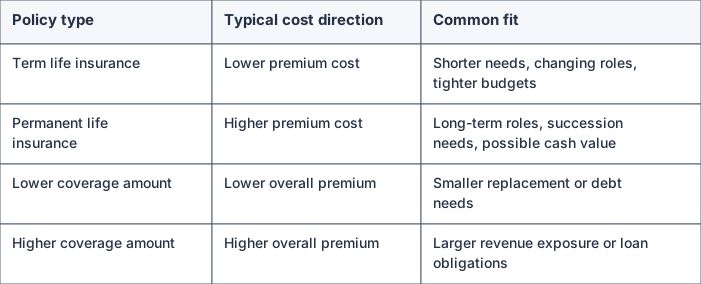
In general, term life insurance is the more affordable starting point. Permanent insurance usually costs more because it does not expire in the same way and may build cash value, depending on the permanent plan. Quotes vary by insurer, so it is smart to compare options.
If you want affordable business insurance Canada, compare quotes from more than one term life insurance company or insurer.
Most businesses pick between term life insurance and permanent life insurance when they set up key person coverage. The right insurance policy will depend on how long the business needs coverage. It also depends on how much you want things to change in the future, and if keeping staff for the long run or planning for someone new to take over is important.
Tax rules play a big part, too. In Canada, if the business is the beneficiary, the cost of life insurance is usually not a tax write-off. But, life insurance proceeds are usually paid out without tax. Remember, the rules can change case by case. It is smart to get legal advice and talk to an expert before you make final plans.
Term life insurance is often picked first for key person coverage. This is because it can be less expensive and easy to match with a known need at the business. If the key person’s job could change, or if you want lower early cost, term life insurance might be a good way to go. That is a big reason why many companies look at term and whole life insurance Canada and see which will work better for them.
Permanent life insurance can be better for long-term goals. You may want a permanent plan if the person will stay for years or if the policy could help with keeping staff or ownership plans. Some types of permanent life insurance also build cash value over time.
Here is a quick comparison:
Yes, you can use key man insurance to cover business owners in Canada if they are important to the company. In many cases, the business owns this insurance policy, pays for it, and gets the benefits. This is different from personal life insurance in Canada, where family members are usually the ones who get paid as the beneficiary.
Most of the time, taxes are easy to explain for this. The company cannot usually deduct these premiums if it is getting the money. The life insurance proceeds almost always come to the business tax-free. In some situations, the death payment can add a credit to something called the capital dividend account. This can help give money to shareholders as capital dividends. Ask your accountant or other advisors for full details.
Here are the basic steps to set up this type of life insurance:
If you want an easy way to compare corporate owned life insurance Canada options, you can use Policy Ninja at www.policyninja.co. The website lets businesses look at choices from several Canadian insurers and talk to a business insurance advisor Canada.
To sum up, key man insurance is very important for Canadian businesses. It helps protect the money and time they put into key people at work. You need to know who is a key person, why your company should get this coverage, and what kinds of policies there are. With this, your company can choose what will work best for them. Picking the right coverage is key, and it is also necessary to know about taxes and who owns the policy. These things can get tricky. So, it is a good idea to talk with experts. If you want a simple way to look at your choices and get the right protection for your company, go to PolicyNinja at policyninja.co. There, you can compare key person insurance with top providers and talk with a licensed advisor who can help you. Taking steps right now can make sure your business is safe in the future.

Cindy David, CFP, CLU, FEA, TEP, is President & Estate Planning Advisor at Cindy David Financial Group Ltd. in Vancouver. A recognized leader in wealth management and estate planning, Cindy guides clients with strategic, tax-effective solutions while championing innovation and women’s leadership in the financial industry. She is the former Chair of the Conference for Advanced Life Underwriting (CALU) — Canada’s professional association for senior life insurance and financial advisors that advances education, advocacy, and best practices in advanced planning and public policy.


