›

Key person insurance helps your company if a key person can’t work anymore. This person can be an owner, founder, partner, top employee, or executive. If you lose someone like this, it can hurt your revenue, your team, or even make it hard for you to borrow money from lenders.
In Canada, businesses often get this as key person life insurance, disability coverage, or by adding protection for big health problems. The right insurance provider can show you all the choices and help you pick the right type of business insurance for your team without making it confusing.

A Canadian business may need key person insurance because some workers are hard to replace. If that key person dies, gets hurt, or cannot come in to work, the company can have a big financial impact. The money coming into the business may go down. The work in the company may slow down. Lenders could start to worry, too.
This insurance coverage helps with business continuity. It gives the company financial protection when there is a big need for it. It is a good way for risk management, mainly for places that count on one founder, executive, or top worker. The next part will tell how this protection helps with real business cases.
When a key person is missing, the problem can get big fast. Sales can drop. Your company could lose touch with clients. Simple choices may not get made on time. That is why key person insurance is seen as a must-have risk management tool—not just something nice to have.
This insurance gives your company money if something happens to a key person. That money can help with the financial impact right after they are gone. It may be used to find a new person for the team, train staff, pay off debt, cover business expense, and keep things running. It can help keep your cash coming in during a hard time.
For many Canadian companies, this help makes them financially stronger. It also lets the leaders take their time to make good plans, not just quick choices. In the end, key person insurance keeps your company’s finances safe. It gives you time to breathe and helps with business continuity, even when things get tough.
Small businesses count on a few people. Many times, the business owner does it all. He or she will work on sales, hiring, running things day-to-day, and keep up with lenders too. When that person is not around, the business may have a hard time. It will likely have more trouble than bigger companies.
This is why key person insurance is so important for a business owner, partner, or anyone who owns shares. This kind of plan can go together with business continuation insurance Canada, shareholder protection insurance Canada, and buy sell agreement insurance Canada. These all help with who owns what and who runs the business if things change. It also offers support as business insurance for entrepreneurs Canada who need this kind of key person coverage.
Key person coverage gives these benefits:
For small businesses, the best thing is staying strong. You have a simple and real backup to keep things going if your key person helps with most of the growth, money, or day-to-day jobs.

A key person is someone in a company who would be hard to replace without big trouble. It could be a business owner, a partner, a shareholder, an executive, or a key employee. This person may have unique skills, strong client connections, or special knowledge about the business. They play a big part in your human capital.
Insurers do not let you choose just anyone for key person coverage. You must show why this person is needed. Things like their role, the money they help bring in, and how tough it would be to find someone new are all important. Now, let's see what types of people and jobs often count as a key person or key employee.
In many Canadian companies, the first names that people think of are the business owner and top leaders. The founder often has the job to handle strategy, money, and main client deals. The CFO deals with planning, money needs, and how lenders see the business. Losing either can lead to fast problems.
But a key person does not always mean someone with a high job title. An essential employee can also be someone who has unique skills that are hard to find in others. It can be a lead developer, the top sales worker, a managing director, or even a technician. These people have strong knowledge that keeps the work going in the company.
What matters most is how the company will be hurt if that person is gone. Will your company lose money, stop working for a while, or have to pay a lot to get someone to fill their spot? If so, then insurance companies may count that person in key person coverage and give coverage for that person.
A good way to figure out who the key personnel are is to ask where your business is most open to risk. Think about who brings in the big contracts to the company. Ask yourself who takes care of major clients. Look for who knows the systems, the money, or the way the business runs better than others. The answers to these can show you who the key people are.
Time is also important when you look at key personnel. If your business would need months to find someone new for a job, it may be time to think about key person coverage for that role. This is even more true when one person in the business does many things. Many private companies and small firms in Canada work like that.
You can look for roles that:
Doing this helps give your business stronger protection. It also helps you talk with a business insurance advisor Canada businesses use to look at choices and write out risks. This way you can choose the right key person coverage for your needs.
Key person insurance helps a business when it loses a very important person. The business gets this type of insurance, pays for it, and is also the one that gets paid out if something happens. If there is a covered problem, the company gets the money.
This type of business insurance is not just for cases of death. With key person insurance, there can also be life insurance, disability insurance, or help for serious sickness. The insurance coverage can match the risks that your company has. The next few parts will show what key person insurance includes and what is not covered.
Key person insurance in Canada can cover more than one kind of risk. If your insured employee passes away, a life insurance policy may pay the business a lump sum. If that person becomes disabled and cannot work, key person disability insurance may provide monthly benefits instead.
Some businesses also use coverage to support debt planning. If a lender depends on one founder or executive, proceeds may help with a business loan, operating costs, or transition expenses. Companies may choose term life insurance, permanent life insurance, or disability coverage based on their needs.
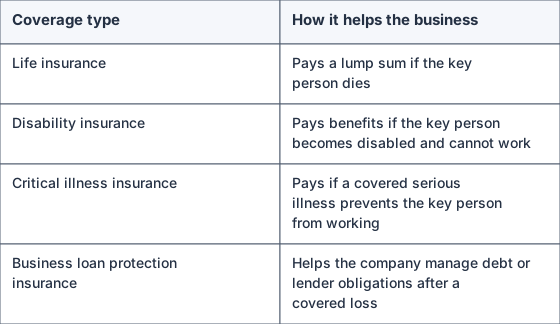
Not every business problem will start a claim. Most Canadian insurance policies focus on covered events, such as death, disability, or a critical illness, based on the type of policy you get. This means if a key person just leaves for normal reasons, the plan will not cover that.
So, if the key person leaves for a new job or decides to retire, the business will not get money from the insurance. There can also be more rules and limits set by the insurance provider. It is important to look at all the wording in these insurance policies before you buy.
Common issues to check:
These limits show why it is good to compare plans. Looking at all the details can help you avoid any bad surprises and get the insurance coverage that fits your real business risk and needs. Make sure the type of policy is right for you and your team. If the key person leaves, you need to know what can happen.
There is not just one answer when it comes to the amount of key person insurance you need. The right amount will be different for every business. It depends on your company, what the key person does, and how much money you might lose if that person is not there. Insurance companies think about your business size, what kind of policy you want, and who the key person is.
You also need to think about how much it will cost to get a new person, money you might not make, pressure from debt, and your everyday business expense needs. So, the amount of coverage should show your real risk, not just a quick guess. The next part will show you a useful way to make that choice.
A good way to pick the right size of key man insurance Canada businesses need is to think about what that person brings to the company. First, look at how much it would cost to find and train someone new for their job. Next, add the money the business could lose, worries about paying back any debt, and the time it would take a new person to learn.
Your choice will depend on your specific situation. For example, if a founder is important to a startup, that can affect money needs, what investors think, and how things run each day. Or, a top salesperson might bring in most of the profit for the year. This shows that everyone can have their own financial impact, so the amount of coverage you buy might change for each key person.
You should look at things like:
These numbers are not the same for every business. Because of this, many owners get several quotes and look at each insurance plan before they pick. This helps you get business insurance that fits your needs. It also makes it easier for your company to keep the coverage in force for the long term.
To sum up, key person insurance helps protect Canadian businesses if they lose someone important to their team. This insurance helps the company keep going, so it takes stress off the owners and other people who matter to the business during hard times. It is important to know who counts as a key person and what is covered by key person insurance. This helps you make better choices for your company. It is also key to know how much insurance you need to get good protection. Don’t let your business be at risk. Take action to keep your company safe in the future. Look at what is out there and get quotes through PolicyNinja to find the key person insurance that is right for you.

Cindy David, CFP, CLU, FEA, TEP, is President & Estate Planning Advisor at Cindy David Financial Group Ltd. in Vancouver. A recognized leader in wealth management and estate planning, Cindy guides clients with strategic, tax-effective solutions while championing innovation and women’s leadership in the financial industry. She is the former Chair of the Conference for Advanced Life Underwriting (CALU) — Canada’s professional association for senior life insurance and financial advisors that advances education, advocacy, and best practices in advanced planning and public policy.


