›

Key person life insurance is a type of business insurance. It helps your company if you lose someone who is important to your work. The key person could be a business owner, founder, partner, or a worker who is hard to replace. This person might bring in a lot of sales or have special skills that almost no one else has. If you lose your key person, your business can face money problems. You may make less money, deal with trouble from lenders, or have problems with day-to-day work.
In Canada, many people get key person life insurance for their business. This is true for both small companies and large ones. It is easy to see why. Losing someone so important can cause a lot of problems. If you want to know more, you should read up on key person life insurance basics.

Key person life insurance is a kind of business insurance. The company will get this insurance policy for a key person who is very important to what the business does, what it says, or the people it knows. If the insured person dies, the company will get a lump sum from that life insurance policy. In Canada, key person life insurance is one good way to help a company when it loses money because the founder, an important worker, or another key person is no longer there.
For a business owner, the goal is simple. The idea is to protect the business, not the insured person’s family. This is not the same as personal life insurance, family life insurance Canada, life insurance for parents Canada, or life insurance for young adults Canada. If you want to know what key person insurance really is, here is a clear answer. It is a kind of business insurance. This plan helps your business stay on track if you lose a key person.
Key person life insurance helps your business during hard times if you lose a key person. This could be an owner or someone important in the business. The company will buy the life insurance policy, pay for it, and get the insurance payout if the person passes away. A lot of people use this type of key person life insurance. It is common for a business to have a life insurance policy that is owned by the company in Canada.
When a key person policy starts, the insurance company gives a lump sum as a death benefit if the insured person passes away while the insurance policy is still active. The business can use this money in any way it wants. It can use it to make up for lost profit, pay a business expense, pay off loans, or use it to find and hire someone new for the key person role.
If your company needs to file a claim, it calls the insurance company. When the claim is accepted, your team will get the insurance payout. This money gives everyone a bit of time to deal with what has happened. That is key for business continuity. It also tells your lenders, partners, and staff that you will get through this loss together.
A key person is someone who, if they are gone, would cause a big financial impact on the business. It does not matter what their job title is. What matters is what they do for the company. If someone has unique skills, deals with important clients, helps sales go up, or leads company plans, this person may need key employee insurance. Some companies still call this role "key man," but "key person" is a better name to use.
Common examples include:
In a small business, one person can be doing many things at once. This makes having an insurance policy very important. If the loss of this person will cause deals to slow down, make investors trust you less, or lead to problems for company work that last a long, extended period, then this person should get a life insurance policy. A life insurance plan is a good idea for them and the business.

A company needs key person insurance. A key person is very important for the business. If this person dies, the company can feel money problems fast. The money that comes in may go down. A project can stop or get slow. The company must pay any debts it has. If you are a business owner, these fast changes make it hard to pay all your workers, talk to people who lent you money, or keep the business working and growing.
This life insurance policy helps the company feel safe when things are not steady. It gives the business a way to handle short-term bills. The business owner can feel less worry and plan what to do next. The next parts will show how this insurance policy keeps the business strong. It also helps the business owner feel better if a critical employee is lost.
Key person insurance helps a business stay strong after the loss of a key employee. If a key person dies, the company gets a death benefit. This money helps the company keep going. It gives the leaders time to stop and think of new plans. They can start to look for someone else for the role. If a company does not have a financial cushion from key person insurance, even a strong business can feel the hit right away. This insurance helps to protect the financial stability of a business when times are hard.
The insurance payout may go toward:
This type of policy helps the company stay open if something happens to a key employee. It gives the company more time to think about what to do next. People do not have to rush or feel lost if they lose someone important. If the insured person helped the company with a business loan or helped clients trust the company, the insurance payout can make things less stressful. This will help the company stay strong and steady during a hard time.
Key person coverage can help keep the good name of your company. It tells people your business is ready for things you do not see coming. If a top executive or key person can not be at work all of a sudden, people who work with or for your company may feel worry. Partners, lenders, and big clients can ask what the company will do next. A key person insurance payout can take care of some of these worries. It also shows there is money set aside if things like this happen.
That support matters in situations such as:
Good partnerships in business start with trust. When a founder, top executive, or someone important leaves, trust can drop fast. Key person coverage helps keep the company strong. It helps keep leadership in place and relationships steady when the team is making choices for what comes next. This is very important for life insurance in Canada for partners, shareholder protection insurance in Canada, and business continuation insurance in Canada.
Key person life insurance is there to help a business if an important person dies and the company has money problems. A key person life policy may not pay for all the costs, but it can handle some big bills a business faces after the loss of a key person. This insurance policy gives the business a way to keep going during a tough time.
For most businesses, losing a key person means there will be costs. The business may have to replace lost income. It might also need to handle debt and pay costs for hiring new people or moving staff. The next sections talk about the main types of costs you may see. You will learn how key person life insurance can help in these real situations. Key person life insurance is important for this reason.
The main reason people get key person coverage is because it helps with the financial impact if a key person is lost. The insurance payout gives the company money that it can use in any way it needs. So, if costs come up from many places at once, the money is there to help. This type of policy can be good for many industries.
Here is a simple view of common uses:
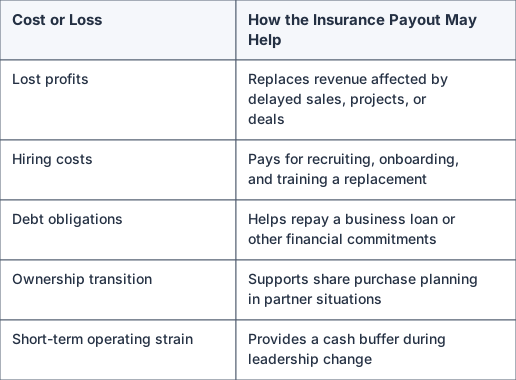
In practice, the policy is there to fill the time between when a loss happens and when a plan starts to help get things back on track. Some companies also add extra cover. These include key person disability insurance, business overhead insurance Canada, or business overhead expense insurance. This way, companies can plan better for risks.
Key person coverage is there to help a company if it could lose an important worker. A few stories from other companies show how useful key person coverage can be. In all these stories, having this policy gives a good financial cushion. This stops the business from feeling too much panic and lets it make better choices.
Examples include:
These days, people see why having a good business continuity plan is important. The plan cannot take away the hurt of losing someone. Still, it can help make money issues feel less heavy. This help makes it easier for the company to keep workers, do the work it needs to do, and serve customers. The company can stay strong while important jobs and tasks get back to normal.
The amount of key person life insurance you pick should fit the needs of the business and the role of the key person. If you choose a small insurance policy, it may not give enough coverage. A bigger life insurance policy can cost more. A good key person life insurance policy must give strong financial protection. It has to cover the real risks that the business may face.
Most companies worry about lost money, debt, what it costs to hire people, and how much time it takes to get back to normal. You can look at these things to help know how much coverage will be good for you. The next parts discuss the key things to check and show an easy way to find out how much coverage you might need.
Many things can change how much business life insurance you need for a key person. If you are a business owner, you need to check your real money losses. Do not guess or rush when making these choices. If the key person has a big role in your business, the loss will feel heavy if anything happens to them.
Useful things to look at are:
Business size and setup are important. If you have a founder-led startup, losing one person can have a big impact. In a large company with several leaders, losing one person does not affect the company as much. Make sure to check your options with someone who understands business insurance well. A business insurance advisor Canada can help you pick the best choice for your needs. Your accountant can also tell you how this changes your taxes.
A key person in a business is someone who has a big part in making the business better. If something bad happens to this person, it can hurt the business. A business owner should know why it is important to protect against such risks. Getting life insurance for this key person can help the business handle money problems if that person dies or cannot work.
Business insurance like this protects the company from a big financial impact. It also helps to cover the loss of profits. If the trouble lasts for an extended period, business life insurance gives the business support. It helps the company take some time to fix things, find new people, and make sure everyone keeps doing their jobs. Getting the right type of life insurance can be good for any business owner. It helps you look after the business and feel ready for anything.
Start by thinking about the direct and indirect cost if you lose the key person. You have to match the risk with a type of life insurance that fits how long you need it and what you can pay. Some companies want life insurance that covers only a set time. Others may want permanent coverage, which has cash value.
A simple way to do this:
After you know what you need, send your application to the insurer. You have to give details about your business and the insured person. Complete all steps that the company needs for reviewing your application. The price will depend on a few things like age, health, how the policy works, and how much the benefit is for. Costs can go up or down. A lot of people use Policy Ninja to compare several Canadian insurers. They also talk with a licensed advisor before making any choices.
The two main types of life insurance are term life insurance and permanent life insurance. You can use both when you need key person coverage. But each type of life insurance helps with planning in a different way. The best type of life insurance for you will depend on your budget, the time you want coverage, and if you need key person coverage just for a set time or for your whole life.
Many people and businesses start with term life insurance. This type of life insurance is easy to use and does not cost a lot. Some people choose whole life insurance or another plan called universal life insurance. People pick these types when they want coverage for a longer time. The next parts will show the trade-offs with life insurance in a way that is easy to understand.
Term life is often the best pick for key person business insurance. A term policy covers someone for a set time, like 10 or 15 years. This time can match a big growth in the company, a plan for money, or a key contract. For most companies, it is good. It makes costs easy to manage.
Common advantages include:
There are some limits to this type of life insurance, like term life. The coverage stops when the term ends. The business will then have to renew it, get another option, or let it end. This type of life insurance does not give you any cash value. If you want to know about term life vs whole life insurance Canada, term life is good for people who want affordable business insurance and do not need much coverage for a short or set time. An insurance company or broker that sells term life insurance can show you the differences in price.
Permanent life insurance is often a good choice if a business needs life insurance for many years. This type of policy does not end after a short period. A few types of permanent life insurance can also help you build cash value over time. That is great for companies that want more than just a basic life insurance plan.
Potential benefits include:
The main problem with these plans is cost. Permanent plans usually need higher premiums than term life. A company might choose one of them if a key individual is very important for its success and future. A business could also pick a permanent plan if it needs bigger insurance, like executive life insurance Canada, business succession insurance Canada, buy sell life insurance Canada, or buy sell agreement insurance Canada. Owners can look into whole life, universal life, or even term to 100 life insurance Canada, all based on what works for them.
Life insurance is not just a simple choice. People and companies look at a few facts. Cost matters, so does picking the key individual, and knowing how much higher the premiums will be.
In short, keyperson life insurance helps a business with money if something goes wrong. It is a good way to keep the company safe during hard times. This life insurance protects your key staff. These people are some of your most important assets.
With this, you can make your company strong and keep its good name. You will also hold your business partners. It is important to know how much life insurance you need. You also need to choose between term and permanent life insurance.
Both of these things can change the way your taxes work. You should talk to your accountant or advisor about how this might change your taxes. If you want to know what life insurance plans can be good for your business, you can go to PolicyNinja.co and connect with a licensed advisor who will help you.
In most cases, the answer will be no. If the business has the insurance policy and gets the death benefit, the key person premium is usually not something you can take off your taxes. It will not be counted as a business expense that you can take off. When the death benefit gets paid out, it is most often tax-free. There may be times when this could change the capital dividend account. You have to talk to an accountant. Get legal advice to know what is right for your case.
In most cases, the company owns the key person life insurance policy. The business pays for the insurance. If the key person dies, the business gets the payout. This shows that the business owner or company controls the insurance policy.
In Canada, rules about life insurance can be different based on how each plan is set up. It is good to read all the parts of your key person life insurance policy before you get it. Make sure you understand what it says.
First, choose who the key person will be. Then, think about how much coverage you want to get for key person insurance. Pick the type of key person insurance that works best for you. After that, get quotes from more than one insurance company. When you look at key person insurance policies side by side, you get to see the prices and what each choice offers. Policy Ninja is a good site in Canada where you can compare life insurance quotes and talk with a licensed advisor.

Cindy David, CFP, CLU, FEA, TEP, is President & Estate Planning Advisor at Cindy David Financial Group Ltd. in Vancouver. A recognized leader in wealth management and estate planning, Cindy guides clients with strategic, tax-effective solutions while championing innovation and women’s leadership in the financial industry. She is the former Chair of the Conference for Advanced Life Underwriting (CALU) — Canada’s professional association for senior life insurance and financial advisors that advances education, advocacy, and best practices in advanced planning and public policy.


