
Life Insurance Comparison Canada: Find the Right Coverage
Life Insurance Comparison Canada: Find the Right Coverage
Choosing life insurance can feel tough when every life insurance policy is different. You may want to know how much insurance coverage you need. It is also important to find a kind and cost that works for you. You might ask how to compare quotes from insurance policy providers in Canada.
This guide makes life insurance easy to follow. You will see how term, whole, and universal life insurance policies work. You will learn what changes the price. You will also know what to check before you ask for life insurance. If you want the right insurance coverage and a simple plan, you are in the right spot.
Key Highlights
- Life insurance comparison Canada helps you match insurance coverage to your budget, family needs, and goals.
- Term life insurance is usually the most affordable choice and fits many short to medium term needs.
- Whole life insurance offers lifelong coverage and guaranteed cash value inside the insurance policy.
- Universal life insurance combines permanent coverage with flexible savings and investment options.
- Life insurance rates depend on age, health, smoking status, coverage amount, and policy type.
- The best life insurance choice depends on your situation, not one company or plan for everyone.
Why Comparing Life Insurance in Canada Helps You Make Better Choices

Comparing life insurance in Canada helps you find the right one and not pay for something that does not fit your needs. Each insurance company gives you different prices, term options, and extra features. When you look at more than one insurance product at the same time, it is easy to see which one will cover your real coverage needs.
It is good to compare life insurance options by thinking about your age, health, who depends on you, your debts, how much you make, and what you want for the long term. These things matter if you are looking for family life insurance Canada, want life insurance for parents Canada, or are starting with life insurance for young adults Canada. Now, let's talk about the personal details that help you make a good choice.
How Your Age and Life Stage Affect Your Coverage Needs
Your age is one of the biggest things to look at in a life insurance policy comparison in Canada. Most of the time, people who are younger pay lower premiums. If you wait, your monthly premiums can go up. This is why many ask about the best time to get life insurance. For most Canadians, being younger means you get lower premiums, so getting life insurance earlier can be cheaper.
Your stage in life also matters just as much. If you have young children, if you just bought a house, or if you still have many years left to work, you may want a life insurance policy with a long term length. If you are close to retirement, you may only need your term life insurance for a shorter period of time. You’ll find that many term life insurance explained Canada articles will talk about matching your coverage to the big moments in your financial life.
Your coverage needs will also change as your life changes. Getting married, owning a home, or having a new baby can all change which life insurance products or term life plan work best. Some policies fit better for short-term needs, while others are made to give long-term financial security. This is why both age and where you are in life should guide your choice of life insurance policy.
The Impact of Income, Debts, and Family Responsibilities
For many people, life insurance is there to replace lost income. If your family depends on what you bring in, having the right insurance coverage can help them pay for daily needs when you are not there. This covers things like housing, food, and other bills. When you decide on the coverage amount, it's smart to start by thinking about how much income you need to replace.
Debt is another thing to think about. Many have mortgages, car bills, or other debts, and those do not just go away. Life insurance options can help protect your loved ones from these money problems. If you still need to pay off a big mortgage or other long debts, be sure your insurance coverage fits with what you owe.
Your family also changes what coverage amount you need. If you help your kids, spouse, or your parents, you might need more life insurance. This is where compare life insurance Canada searches can help you look at what you really need, not just how much it costs. The real goal is to have enough protection for the people who count on you, so their needs are covered if you can't be there.
Matching Life Insurance to Your Budget and Financial Goals
Price is important, but it should not be the only thing you look at when choosing an insurance policy. Life insurance premiums change based on risk and how the plan is set up. In Canada, your age, health, if you smoke, the coverage amount, and the type of insurance policy you pick will all change the cost. Term plans often cost less at first. Permanent coverage can cost more, but it lasts a long time and might build cash value.
Think about what your insurance coverage needs to do for you. Some people want life insurance only for the years when they have kids at home. Others want insurance coverage that will last for things like final expenses or estate planning. Your financial needs should be the most important thing as you compare insurance policy options.
It helps to look at:
- Your monthly budget for life insurance premiums
- How long you will need insurance coverage
- If you want the insurance policy to build cash value or just give plain protection
- If you want the plan to be flexible or to keep things simple
The best life insurance will always be the one you can pay for, know well, and keep for however long you need it. This is true for both personal life insurance and for business insurance for entrepreneurs Canada needs if it is about ownership planning.
Types of Life Insurance Policies Canadians Can Choose From
There are two main types of life insurance in Canada. The first is term life insurance. The second is permanent life insurance. Term life gives you insurance coverage for a set period. Permanent coverage stays active for your whole life as long as you pay the required amount. The right insurance policy for you depends on how long you want the insurance, and how simple or detailed you want it to be.
Inside permanent life insurance, there are options like whole life insurance and universal life insurance. Both of these give you life insurance coverage for your entire lifetime. But they are not the same. Each one handles cost, how long the policy lasts, and cash value in its own way. To compare them, you should first look at how they treat these important things.
Term Life Insurance Canada: Simple, Flexible Protection
Term life insurance is one of the simplest types of policy for many people in Canada. It gives you term coverage for a set period of time like 10, 20, or 30 years. If you pass away during that period, your family or loved ones get the death benefit. If you are still alive when that time is up, your coverage will end unless you can or want to renew or change it.
Many choose term life insurance because it has lower premiums, especially if you are young and in good health. This type of policy is a good way to get temporary coverage when you need it, such as while you raise children, pay for a house, or need to protect your income during your working years. That is also why most term vs whole life insurance Canada comparisons start with cost.
Life insurance rates can change due to the insurance company you pick, your age and health, or if you smoke. Some insurance companies in Canada also let you pick different term lengths or give options to change your plan later. If you want to compare a term life insurance company, look at the price, how you renew your plan, and if the coverage still works for your needs later on.
Whole Life Insurance Canada: Lifetime Security and Cash Value
Whole life insurance is a type of insurance policy that gives you permanent coverage for your entire life. If you keep up with the required payments, this life insurance will not end after a set number of years. This is not the same as term life, which is only good for a short time. Many people in Canada like this lifelong coverage because it gives them peace of mind.
One big thing to know about whole life insurance is the cash value. Many whole life plans build cash value over time at a set rate from the company. This means whole life is not just like plain insurance. It often costs more than term coverage, but you get stability and you can know what to expect for a long time.
Whole life insurance can be right for people who want simple, lasting protection. It can also help with final expenses or be useful for estate planning. It works well for families who have people who will always need help. If you are looking at whole life insurance Canada options, check the price, find out how cash value grows, and see if paying more fits your goals.
Universal Life Insurance Canada: Coverage Plus Investment Options
Universal life insurance is a type of permanent life insurance. It works in a different way than whole life. With universal life, you get a death benefit and a savings account. There is an investment part inside the savings. This setup gives you more control, but it also makes the policy more complex.
Some people find flexible coverage and choosing where to invest their money attractive. When you look at universal life insurance in a simple way, you are putting money toward life insurance and towards saving at the same time. The cash value does not always go up in a steady way like it can with whole life. The cash value will go up or down with how well the investments do.
Because of that, universal life insurance is usually better for people who are okay with watching over and making choices about their money. The information shows that high net worth people in Canada often use this after they have used other tax-free accounts. If you compare this type of life insurance to term or whole life, think about how complicated it is, how much it costs, and your own financial needs.
Comparing Term vs. Permanent Life Insurance in Canada
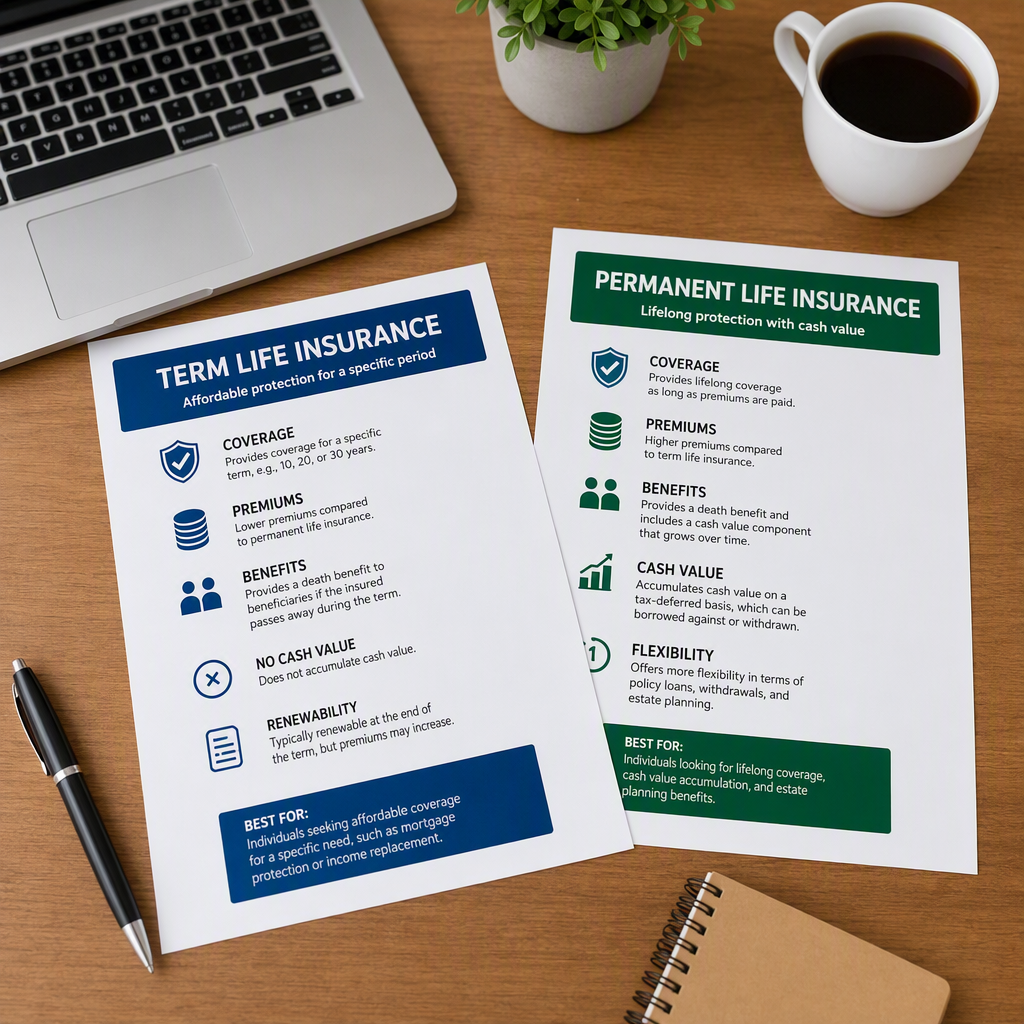
The main difference between term life insurance and permanent life insurance is how long you get covered. Term insurance will protect you for a set time, such as 10, 20, or 30 years. Permanent coverage can give you a life insurance policy that lasts your whole life. That is a big reason behind how much you pay, what you can change, and if your insurance policy grows cash value.
For many people in Canada, term life insurance means lower life insurance rates and simple choices at first. Permanent life insurance costs more, but you get protection for a long time, plus some savings or cash value. If you compare term life vs whole life insurance in Canada or look at term vs permanent coverage, think about things like how long you want it, how much you pay each month, and what value it has over many years.
Key Differences: Duration, Cost, and Cash Value
Start by looking at how long each type of life insurance lasts. Term life insurance gives you protection for a set period of time, like 10, 20, or 30 years. Permanent life insurance gives you permanent coverage for your entire lifetime. The term choice is best for goals you only need to cover for a while, but permanent life insurance can help when you have needs for all of your life or want to use it for estate planning.
Now think about the cost of life insurance. Term life insurance usually costs less, especially when you first buy a plan. Permanent life insurance is much more expensive because the coverage can last as long as you live and can also build cash value. The coverage amount you pick matters, too, as it affects how much you pay for both types.
Here's a table to make it easy to compare term life and permanent life insurance:

These basic facts give a good answer to one of the most common questions about the difference between term life and whole life insurance in Canada.
Who Should Consider Term Life Insurance Canada?
Term life insurance Canada choices can be good for people looking for basic, short-term coverage at a month-to-month price they can handle. Many use term life to help protect income, take care of kids, or cover big debts while those bills are still there. For a lot of families, term life policies give the most for the lowest starting cost.
This kind of plan can be right for you if you want something simple and can pay less each month. Insurance premiums for this plan are often lower than for permanent coverage. It works well for young families or people who own a house and have to pay for many things. You can match term life insurance to cover a loan, a mortgage, or until your children grow up and take care of their own money needs.
You may want to look at term life if you:
- Need temporary coverage for a mortgage or loan
- Want lower monthly costs right now
- Have young children and want income protection
- Like a simpler plan without cash value
When you check out insurance providers, remember not to look just at the lowest rate. It helps to check renewal rules and if you can turn your plan into a permanent one later.
Who May Benefit from Permanent Life Insurance Canada?
Permanent life insurance in Canada can be a good choice for people who want lifelong coverage. With this, the policy will not stop at the end of a set time. This is helpful for those who need to stay protected for all their life. Some people in Canada also want an insurance product that may help them save money or set up a plan for the future.
Whole life insurance is usually picked for its steady coverage, while universal life gives more choice on how to pay and grow savings. Permanent coverage can help with estate planning or costs after someone passes away. Your best pick depends on what matters most to you, such as reaching your long-term goals, even though the price for these policies can be higher.
You may want to get permanent life insurance if you:
- Have someone who will need your support for all their life
- Want to cover all your final expenses
- Need help to reach your estate planning plans
- Want coverage that does not stop
If you own a business, you may hear terms like corporate owned life insurance Canada, executive life insurance Canada, partnership life insurance Canada, shareholder protection insurance Canada, and business succession insurance Canada. These options serve special case needs for the business. No matter which one you choose, make sure you match the policy to what you really need.
Comparing Whole Life and Universal Life Insurance
Whole life insurance and universal life insurance are both types of permanent policies. But the way they work is different. Whole life is for people who want more stability. Universal life is for those who like more flexibility and choices with investments. Both have insurance with cash value built in, but how that cash value grows is not the same.
When you compare these types of life insurance, take a good look at how the premiums work, the things that are guaranteed, and how involved you want to be with tracking or making changes. One insurance company can offer both. The right one for you will depend on what you want for cost, how much control you like, and how you plan for the long term.
Premiums and Long-Term Value
Whole life and universal life cost more than term coverage, but the way they bring value over time is not the same. Whole life comes with fixed insurance premiums and cash value growth that the insurer promises. This can be good for people who want a life insurance policy with less worry and do not want to keep making changes.
Universal life is not as simple. The cost can go up or down based on how you set up your policy and how the money you put in does. Because of this, what you get later might be more or less than you thought. When you choose universal life insurance, you also take on more to keep up with.
So which life insurance policy gives better value? The answer depends on your financial obligations and how much you want to deal with new details. Whole life makes sense for people who want steady cost and cash value growth. Universal life can work for those who want control and have their first money needs covered. Take time to review both insurance policy types before you choose.
Flexibility in Universal Life Insurance Canada
Universal life insurance is different because it has more options than many other plans. With this type of life insurance, you can choose how to pay for it and handle the savings side. This flexible coverage gives you more control over your insurance coverage as time goes on.
But more options do not always mean things are simple. The investment component needs your focus, and what you get back depends on how markets do and how much you keep putting in. If you want life insurance coverage that you do not have to worry about much, whole life policies might feel easier for you. If you want to get into the details, universal life could be something you want to try.
The best life insurance is not just about having the most options. It is about finding what fits your needs and what you feel good about. Universal life insurance is a good pick for some people, but it is better to make this choice after you know about the cost, what could go wrong, and how much work you must put in.
Building Cash Value: What to Know
Cash value is a big reason why many people think about getting permanent coverage. Whole life insurance and universal life can help you build cash value in the insurance policy over your entire lifetime. But the way the cash value grows is not the same, and you need to look at this before picking one.
Whole life gives you cash value growth that is guaranteed by the company. The rate is set and does not change. Universal life works with investments, so your cash value can grow more, but there is no guarantee. This means universal life is more flexible, but it can also be harder to figure out. You may have to make more choices as you go.
Keep these points in mind:
- Whole life focuses on guarantees and stability
- Universal life ties growth to investment performance
- Cash value is part of permanent coverage, not term coverage
- Higher policy complexity often means more review is needed
If you only want simple protection, you might not need cash value. If you look for more than a death benefit, you should look at all the details of each type of life insurance before you choose.
How to Compare Life Insurance Quotes and Rates in Canada
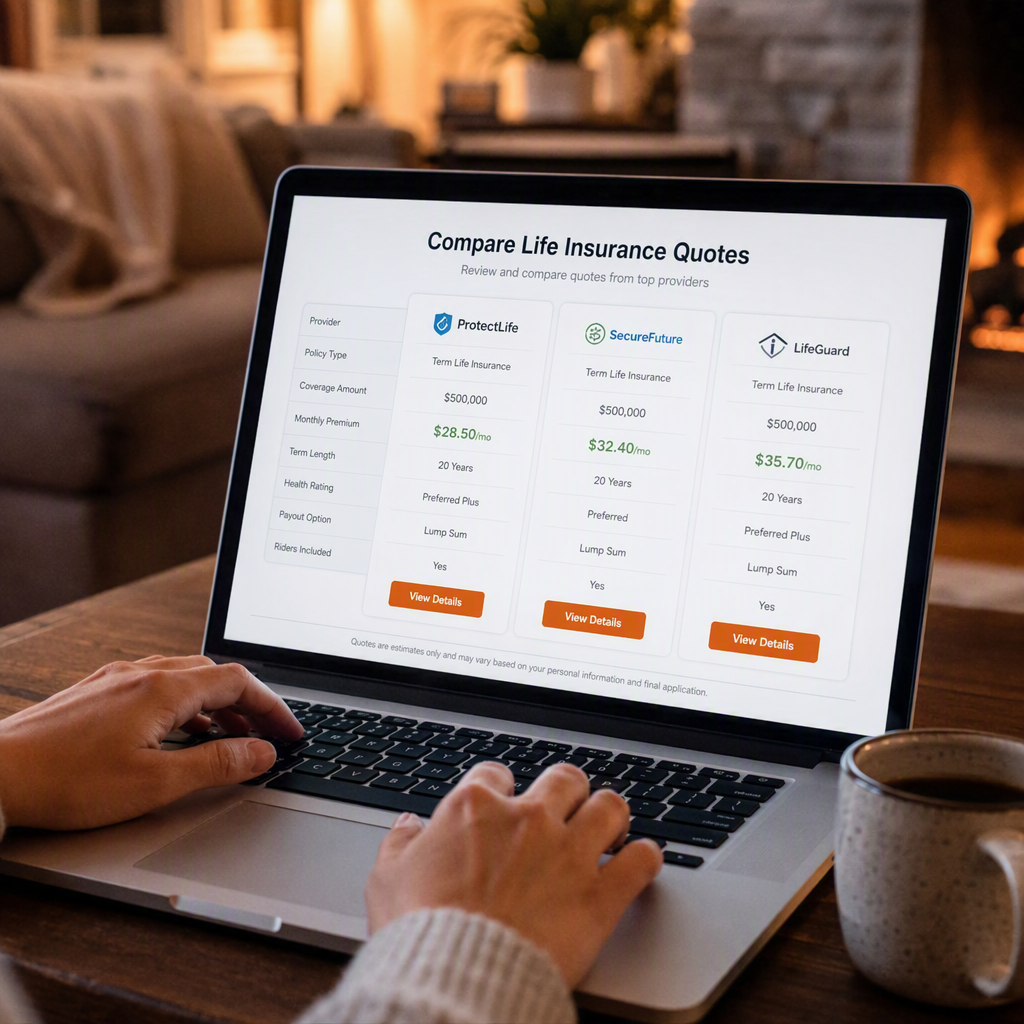
When you compare life insurance quotes in Canada, you should start by using the same details for each quote. Your insurance policy amount, term length, and other personal information should not change from one insurance company to the next. If you use different details, it is hard to know which is the best deal. It is easier to see real price changes when you compare life insurance quotes this way.
Life insurance rates can change based on the insurance company, how old you are, your health, if you smoke, and what kind of product you pick. Because of this, you must look at more than just the monthly price. Pay attention to term length, what happens when it renews, if you can switch to other plans, and if the life insurance quote is for permanent coverage or short-term. The next parts will show what changes the price and how to compare your choices the right way.
Life Insurance Rates Canada: What Affects Your Price
Life insurance rates in Canada are set based on how risky you are to insure. Age is a big part of this. Most of the time, life insurance premiums get higher as you get older. Your health is also important. If you smoke, the cost can be two or three times more than for someone who does not. That is why it is best to apply early, so you can pay less over time.
The details of your life insurance policy change what you pay, too. If you want a bigger coverage amount, you will pay more than for a smaller one. Permanent plans usually cost more than term plans since they last longer and have cash value you can use. Some life insurance products need a medical exam to get approved. Other options called simplified issue might skip the exam, but they often give easier access in exchange for different prices or lower coverage limits.
The most common things that decide life insurance premiums are:
- Your age
- If you smoke or not
- Health and medical exam results
- Coverage needs and policy type
Every insurance provider can charge different prices, even for the same person. That is why it is smart to compare more than one company before you pick a plan.
Getting Free Online Life Insurance Quotes Canada
Yes, you can get free online life insurance quotes in Canada to help you compare your choices. These tools can let you see prices fast and you won't have to start a full life insurance application right away. This can save you time while you think about the right policy type or coverage amount you need.
You will get the most from online quotes if you already know some basics. Know what term length you want, how much coverage you need, and if you want term or permanent life insurance. Online quotes are great for early policy comparison. Still, you might want to talk to an insurance advisor to be sure you know why some choices might be better for you. They can help explain special features, if you can switch plans later, or if there are any limits you should know.
A good online quote tool should help you:
- Compare several life insurance policies at once
- See how the term length changes the price
- Find out which info may change your final approval
If you want an easy start, Policy Ninja can help. It lets Canadians compare life insurance options online in a simple way.
Tools for Side-by-Side Policy Comparisons
Side by side tools help you compare life insurance plans in Canada with less time and effort. You do not need to jump between different provider pages. Instead, you can see rates, term lengths, and all types of life insurance in one spot. This answers a common question: are there tools to help compare life insurance plans in Canada side by side? Yes, there are. They are most helpful when you know your coverage needs.
The best life insurance comparison tools show you more than just the price. You can look at different types of life insurance, pick the term length, and see if a policy gives you the chance to change to a permanent option later. These tools show you what each insurance company is offering, so you can decide what is best for you.
Useful life insurance comparison tools let you:
- Review quotes from many providers
- Compare term options and permanent options
- Match different policy choices to your life needs
If you want an easy way to look at life insurance, Policy Ninja helps Canadians compare insurance company options without any added worry.
Factors to Consider When Comparing Life Insurance Policies
When you compare one insurance policy to another, pay close attention to things that really make a difference. Look at the types of life insurance you can get, the coverage amount, how much you will pay each month, and how long the protection stays in place. A low price might seem good from the start, but it may not match what you need for your financial needs.
It's smart to check policy features, what is not covered, and if you can switch to another type later. These facts can change how helpful the coverage is for you with time. Before you pick a plan, be sure it fits with your income, if you have debts, the people who rely on you, and your goals. In the next parts, we talk about the main things you should check.
Choosing the Right Coverage Amount
A common question people have about life insurance is, how much coverage do I need? The answer can be different for each person. There is not one number that works for everyone. Your coverage amount should match what your family needs if you are not there to provide for them. For most people, this means thinking about housing costs, any debts, and other big money needs.
Think about what you want your life insurance coverage to do. Are you hoping the coverage will take care of your mortgage, give income to your kids while they are still young, or pay your final expenses when the time comes? The best life insurance choice is one that helps with all your needs, but is not too hard on your budget.
You may want to include:
- Mortgage or major debts
- Income replacement for dependents
- Child related costs
- Final expenses
If you own a business, you can use this same idea. It can help you figure out how much coverage to get for key person insurance, business continuation insurance Canada needs, or business overhead insurance Canada plan. The right coverage amount for life insurance or other plans should fit the real risk, not just be a guess.
Reviewing Exclusions and Policy Features
You should not look at the price by itself. Before you pick an insurance policy, read all the policy features and know what is not covered. Two life insurance products can seem the same at first. But, they might be very different when you look at the details. This is a big deal when you compare quotes from different companies.
Some life insurance policies have things like conversion options, rights to renew, or other rules for approving coverage. Some may have limits that you may not notice right away. If you want to buy critical illness insurance too, keep that apart from your life insurance. This will help you know what each product will pay for and when it can help you.
Check for things like:
- Renewal terms
- Conversion options
- Exclusions and waiting rules
- Coverage limits or simple issue terms
Looking at all the details now can help you avoid problems in the future. It is one of the biggest steps for a strong life insurance comparison Canada process.
Questions to Ask Before Deciding
Before you say yes to any insurance policy plan, stop and ask some simple questions. This helps you know what you will get and if the life insurance policy will still help you if things change in your life. The insurance advisor or insurance provider that you talk to should give clear answers. The conversation should not feel rushed.
Start with the basics. Ask what will happen when the term length ends. Can you change or convert the plan later? Is the price you see the same for the whole time? The answers help you see real differences between each insurance company.
Some helpful questions are:
- How long will this life insurance policy be good for my needs?
- Is it possible to switch or convert the plan later?
- Can the price or premium go up or down? Why?
- Are there things not covered or exclusions that I should know about?
If you own a business, you can also ask about buy sell life insurance Canada, buy sell agreement insurance Canada, how does buy sell insurance work, corporate owned life insurance Canada, or business overhead expense insurance. The main thing is to be sure you know the life insurance policy details before you make a choice.
Conclusion
To sum up, looking at and telling apart life insurance options in Canada helps you make smart choices for your life and money. You should know about the types of life insurance you can pick from. It’s also good to see what changes your coverage and affects your costs.
You can feel sure about your plan when you get all the needed information. Some people pick term life insurance because it is flexible, while others like being covered for life with a permanent plan. It is smart to think about your age, your money coming in, what you owe, and what you have to take care of before you go with one choice over the other.
Be sure to ask good questions. Watch out so you do not miss any important facts when looking at quotes. If you feel ready to move forward, start to look at life insurance options and get a quote with PolicyNinja.
Frequently Asked Questions
Can I switch life insurance policies if I find a better option?
Sometimes, you can do this. Some insurance policies let you change your term life insurance to a permanent life insurance policy later. But not all insurance companies give you this choice. Before you make this move, ask your insurance provider about when you need to do it, how much it will cost, and if your new life insurance policy will change your premium or how much coverage you get.
Which Canadian life insurance companies have the most competitive rates for term coverage?
The cost of term life insurance depends on age, health, if you smoke, and how long the term is. This means one life insurance company may not be the cheapest for everyone. Companies like Manulife, Sun Life, RBC, TD, and others all have different prices for term life. It’s a good idea to look at term coverage quotes from more than one insurance provider before you pick one.
What are the benefits of using a trusted comparison website like PolicyNinja?
A trusted comparison site lets you save time and helps make it easy to compare policies side by side. You do not have to check each insurance company on your own. You can see life insurance quotes and life insurance rates all in one spot. This makes it simple for people in Canada to pick the best life insurance for their needs. You can go through different life insurance options without stress.
Common Mistakes to Avoid When Comparing Life Insurance in Canada
Many people make mistakes when they pick an insurance policy. They often look at price only. They may also choose the wrong coverage amount or forget to check what is not covered or what features come with the policy. Good life insurance coverage should fit your family, your debts, and your budget. It is a good idea to compare carefully. This will help you not buy life insurance that is not right for you.
Focusing Only on Price Instead of Coverage
Low life insurance rates may look good to you, but the cheapest life insurance policy might not be the best choice. If your term is very short or the amount of your life insurance policy is not enough, your insurance coverage may not be good for your needs. The best life insurance does more than save you money. It fits your real coverage needs to help you and your family.
Overlooking Exclusions or Policy Details
It is simple to look at the premiums and forget about the details. But things like what is not covered, how to renew, and other parts of the insurance policy can change how helpful it is. Because life insurance products are not the same at every insurance company, you should always read every part before you fill out a form or say yes to an offer.
Not Revisiting Your Needs Over Time
Your coverage needs can change when you get married, have children, buy a new house, or make plans for later in life. The life insurance policy that worked before may not fit your life now. It is good to look at both term life insurance and permanent life insurance as your financial needs and family plans change over time.
How Canadians Can Find Affordable Life Insurance with Confidence
Sure, please provide the text you want me to rephrase.
Tips for Applying with the Best Canadian Insurer for Your Needs
Before you send in a life insurance application, look at your coverage needs, your budget, and the policy you want. Next, compare more than one insurance company. Make sure you ask clear questions. The best life insurance plan will be different for each person. If you need help, an insurance advisor can talk to you about term lengths, the features, and how much it costs.
Why Comparing Multiple Quotes Matters
Comparing a few life insurance quotes helps you see the real differences in life insurance rates, how the policy is set up, and what you get for your money. One insurance provider may offer a better price for your profile while another may not. When you look at more than one life insurance option, you have a better chance to get insurance coverage that works for you and will not cost you too much.
A Simple Way to Get Started with PolicyNinja
If you want a simple way to begin, you can go to PolicyNinja at https://www.policyninja.co/. There, you will find tools that let you compare life insurance and see life insurance quotes in one spot. This is a good choice for people in Canada to look at insurance coverage from more than one insurance company. It can help you get to the best life insurance for you.

Cindy David, CFP, CLU, FEA, TEP, is President & Estate Planning Advisor at Cindy David Financial Group Ltd. in Vancouver. A recognized leader in wealth management and estate planning, Cindy guides clients with strategic, tax-effective solutions while championing innovation and women’s leadership in the financial industry. She is the former Chair of the Conference for Advanced Life Underwriting (CALU) — Canada’s professional association for senior life insurance and financial advisors that advances education, advocacy, and best practices in advanced planning and public policy.


