
Whole Life vs Term Life Canada: Choosing the Right Coverage
Whole Life vs Term Life Canada: Choosing the Right Coverage
Choosing between whole life and term life in Canada matters because they offer different help to your family. Term life insurance covers you for a set number of years. Whole life insurance keeps you covered for your whole life and can build cash value for you. The right choice is about what you want the policy to do for you. If what you need is something easy that compares cost, coverage, and long-term value, this guide will show you how to figure it out.
Key Highlights
- Term life insurance covers you for a set period, while whole life insurance lasts for life.
- A term life insurance policy is usually the lower-cost option for temporary needs and a chosen coverage amount.
- Whole life insurance costs much more, but it includes cash value and permanent protection.
- Term coverage often fits mortgages, income replacement, and young families.
- Whole life can suit estate planning, lifelong dependents, and long-range financial goals.
- Your best life insurance policy depends on budget, family needs, debts, and future plans.
Why Compare Whole Life vs Term Life Insurance in Canada Matters

When you look at whole life vs term life insurance, you can see what you are paying for with each one. The main thing to know is this. Term life insurance gives you coverage for a set period. Permanent life insurance, like whole life, can last your entire life and could build value over time.
This is important because everyone has different financial needs. Some people might need a big coverage amount to help pay for a mortgage right now. Others may want permanent life insurance for lasting protection in the future. Seeing these choices side by side can help you pick the one that is right for you.
Key Reasons Canadians Seek Life Insurance Today
People get life insurance for real reasons, not just for some far-off idea. In Canada, many people want to make sure the people who need them have financial security. So, they pick a coverage amount that covers true needs if something happens to them.
People often buy life insurance to:
- Replace income so a partner or children can pay daily bills
- Pay off a mortgage, loan, or other debt so their family is not stuck with that load
- Leave a death benefit to help with estate planning or keep up ongoing care
- Protect dependents during the years when financial obligations are the biggest
The reason you get coverage can help you pick the right policy type. If you only want it for a certain time, term life could work well. If you want support that lasts through all the years, you may want to think more about whole life.
How Choosing the Right Policy Impacts Your Family and Financial Goals
The insurance policy you pick has a big effect on how your plan works for you over the years. If you have a policy that matches your financial needs, it can protect your family. It does not put too much strain on your budget each month. Finding that balance is key.
Term insurance with a larger coverage amount can help pay for income replacement, debt, and costs for your kids when you are working. This gives real financial security if your family counts most on your paycheck.
If your goals include having lifelong coverage, or want to support a lifelong dependent, or need a tool for estate planning, you might want to look at whole life. Paying more for permanent protection may be the best choice for your long-term needs.
What Is Term Life Insurance in Canada?

Term life insurance is a type of insurance policy that protects you for a set period, like 10, 20, or 30 years. If you die during that time, the person you pick as your beneficiary gets the coverage amount as a payout. This payout is tax-free. If the set period ends before you die, the insurance policy usually ends.
Many Canadians like this kind of life insurance because it is simple and costs less. It is made for short-term needs, so it is a good idea when you want to compare whole life and term life insurance.
How Term Life Insurance Policies Work
A term life insurance policy is a simple agreement for a set period of time. You pick the coverage amount and choose how long you want the life insurance protection to last. You make payments, often every month, as long as your term life insurance policy is still active.
If you die during the set period, the insurance company gives the death benefit to your chosen person. If you live past the end of the insurance policy, there is no payout with this policy type. A standard term life insurance plan does not build a cash value.
Many people in Canada go with term life insurance because it is easy to use and clear. You get the coverage amount for the years when you need it most—like raising kids, paying off what you owe, or covering your home loan. Term life works well for goals that only last a certain time.
Common Coverage Lengths for Term Life Insurance (10, 20, 30 years)
A term life insurance policy gives you options, which is one reason so many Canadians prefer it. The best term length depends on how long you expect major financial responsibilities to last. Think about your mortgage, children, debts, and income needs.
Here is a simple text table that shows how common term lengths are often used:

You do not need the same policy forever if your need is temporary. Matching the policy type to your timeline can help you avoid overpaying while keeping the right coverage amount in place.
What Does Term Life Insurance Cover in Canada?
Term life insurance is there to help cover the risk of death in the years you are covered by the policy. If death happens during that time, your beneficiary will get the death benefit. This money can be used to handle financial obligations in the years your family needs your income the most.
People often use term life insurance for things like:
- Mortgage or loan payments
- Income replacement for a spouse or children
- Other household costs that only come up while you work
Term life insurance does not provide coverage for critical illness, and it does not help you build savings. It is known for being affordable protection. That is why term life insurance Canada is often the more affordable choice for temporary needs when compared to whole life insurance Canada.
What Is Whole Life Insurance in Canada?

Whole life insurance is a kind of permanent coverage that keeps you protected for your whole life. Like other life insurance products, it gives a death benefit to your loved ones when you pass away. The big thing that sets it apart is this - as long as you pay your premiums, it does not expire after a certain time.
This type of policy also has cash value that builds up in the policy as time goes by. Cash value is one reason whole life insurance in Canada costs more. That's also why people often use it for their longer-term plans with money.
How Whole Life Insurance Policies Work
Whole life insurance gives you permanent coverage, plus a savings feature. You pay a set amount, and some goes to the insurance part and some builds cash value in your policy. Over the years, that cash value grows.
If you pick whole life and not term insurance, your coverage does not stop after 10, 20, or 30 years. As long as you keep your policy active, your beneficiary will get a death benefit. This is at the heart of permanent coverage.
This policy type works well for people who want stability and want to be sure of what they will get in the long run. It also fits Canadians who are looking for steady cash value growth, want lifelong protection, or need life insurance to help with bigger estate goals—not just short-term family needs.
The Lifetime Coverage Promise of Whole Life Insurance
The main reason people pick whole life is lifelong coverage. With this, you do not just have protection for a set time, like when you have a mortgage or young kids. You get permanent coverage that can last as long as you live. This brings peace of mind to some families.
This lasting protection can be important if there is someone in your life who will always need you to support them. It is also important if you want to leave money for your family through a guaranteed death benefit, not just pay off a short-term debt.
One more big part of whole life is the guaranteed cash value. The value grows over time, even if the growth is slow. You get a built-in savings option that you simply do not get with term insurance. This is why some Canadians like whole life when they start thinking more about legacy, certainty, cash value, death benefit, lifelong coverage, permanent coverage, and long-term plans.
What Does Whole Life Insurance Cover in Canada?
Whole life insurance is a type of life insurance that covers you for your whole life, not just for a certain number of years. It gives a death benefit to your loved ones when you die. This insurance also grows cash value as time goes on, which is not like basic term life.
Key features often include:
- A death benefit that lasts a lifetime for your loved ones
- Cash value that grows inside the policy
- It can help with estate planning or support lifelong dependents
Whole life insurance is not the same as critical illness coverage, but some people look at both when they want more protection. When you compare costs, whole life is almost always much more expensive than term life insurance. The higher cost comes from having lifetime coverage and the cash value that builds up in the policy.
Comparing Coverage Length: Term vs Whole Life Insurance
Coverage length is a big difference between term insurance and permanent life insurance. Term insurance covers you for a set period. Whole life offers permanent coverage. This can last for your full lifetime. That is the main thing that helps you choose which type to get.
If you only need coverage until a certain time, term insurance works well. If you want coverage for your whole life, lifetime coverage may be the right choice. Once you get this part clear, comparing the rest of the options feels easier.
Short-Term vs Lifetime Protection Explained
Think of term insurance as a way to cover you for a certain time. It helps when you need protection during a set period. For example, it can be helpful when your kids are young or you still owe money on your home. When this time in your life ends, the need for term insurance could go away.
Permanent insurance is different. It is made for needs that last through life. If you want lifelong coverage for someone who counts on you, want a payout in the future for estate planning, or just want to be sure the protection stays in place, whole life will be the way to go.
Here is what to know. Term insurance works for risks that do not last long, while whole life is for needs that go on. The main difference is not only about how long the plan lasts. It is about whether you are getting insurance for the short term or for your whole life.
Which Coverage Length Suits Different Canadian Needs?
The best coverage length is based on your financial situation. You should pick life insurance that covers the time your family or others rely on your income, the years left on your debt, and the support you want to leave for them.
In many cases:
- Term life insurance works well for parents who have young kids or people who still have a mortgage.
- Term life insurance is also good for people with short-term debts or those not far from retirement.
- Whole life insurance can be a good choice if you have lifelong dependents who will need support for a long time.
- Whole life insurance is also helpful if you have estate planning or inheritance needs.
The coverage amount is important, too, but most people decide the length of coverage first. Think about if you need protection for only a set time or all your life. This choice helps you figure out if term life or whole life insurance fits you best. For Canadian households, your decision is easier when you keep your financial situation, type of coverage amount, estate planning, and any lifelong dependents in mind.
Premiums and Cost: Whole Life vs Term Life Insurance
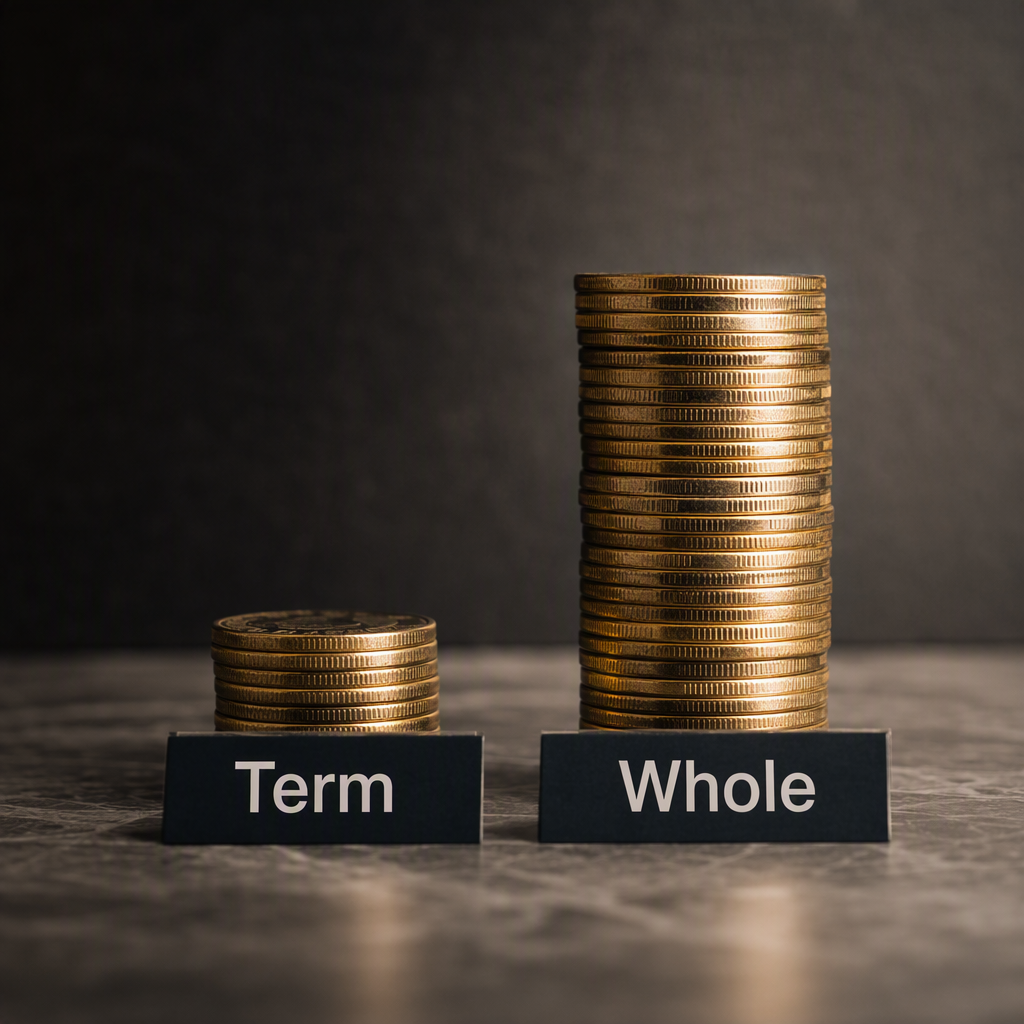
Cost is usually what helps people choose between whole life and term life in Canada. Most of the time, term life insurance premiums are much lower. This is true especially when you are young and healthy. Permanent life insurance costs much more, since it stays for your whole life and can build cash value.
The price changes based on your age, health, if you smoke, and the coverage amount you get. A medical exam may be part of how they check things before you buy. It is a good idea to look at term life insurance rates now, and see how they might change over time before you pick your policy.
Typical Life Insurance Rates in Canada for Each Policy Type
Life insurance rates Canada vary, but the gap between term life insurance and whole life insurance is usually large. Sample pricing in the compiled information shows term as the more affordable option by a wide margin for many buyers.
Here is a text table using the sample Canadian rates provided for $500,000 in coverage, regular health, non-smoker status:

These examples are only general guides, not guaranteed quotes. Still, they make one point clear. If you are asking which is more affordable in Canada, term life usually wins on monthly cost.
How Premiums Change Over Time
Premium patterns are not the same for term policies and whole life insurance. For many term policies, the fixed rate does not change while the term lasts. This fixed rate can help you make a budget while the coverage is in effect.
But, the main issue comes after the term ends. If you choose to renew, your cost usually goes up because you are older then. That means term policies start with lower costs and stay that way for a time, but can get more costly when it is time to renew.
Whole life is different. The payments are much higher at first, but this type gives you permanent coverage that lasts for the long run. These premiums tend to stay nearly the same year after year. This gives you more predictability. However, it also means you need to be ready to pay a higher amount each time from the beginning.
Affordable Life Insurance Canada: Tips for Canadians on a Budget
If you are looking for affordable life insurance Canada, you should choose a policy that fits your real needs. Don’t buy more life insurance coverage than you need, or pick a plan that is not right for you. It can put too much strain on your budget. For most families, simple term life insurance coverage is a good choice. It gives value and also costs less.
Smart ways to keep costs low:
- Pick life insurance coverage for the years you need, not more.
- Get a personalized quote that takes into account your age, health, and financial situation.
- Compare different offers and do not settle for the first plan you find.
- Pick term life insurance first if you need coverage only for some time, and saving money is your top goal.
You can use compare life insurance Canada tools to make things easier. Policy Ninja helps you collect life insurance quotes Canada. It lets you review options all together, so you can find the right policy without stress.
Cash Value and Investment: Whole Life vs Term Life Options

Cash value makes whole life insurance cost more than term life insurance. Whole life insurance comes with cash value that builds up as time goes on. Term life insurance just pays out the death benefit if you die during the policy years. Because of this, their prices and uses are not the same.
Some people like saving extra money with the cash value part. Others choose term life insurance because it costs less. They may then use their money to invest by themselves. If you are thinking about which one to get, cash value is the thing that will help you make your choice.
Understanding Cash Value in Whole Life Insurance
The cash value component in whole life insurance grows over time in the policy. You can think of it like a savings account that is part of your insurance. It works inside rules set up by the company.
Usually, this cash value is guaranteed to grow at a fixed rate by your policy. When you wait, it builds up surrender value if you decide to end your policy. There can be fees or you may get less value, based on when you give up and on the product details.
That is why whole life is popular with people who want to get guaranteed cash value and insurance. Still, this feature makes whole life cost a lot more. If you just want protection for a set period, term is often a better and less pricey choice.
What Happens If You Outlive Your Term Life Insurance Policy?
If you outlive your term life insurance policy, the coverage will stop once the set period ends. In a normal term life insurance policy, there is no payout when the term ends. The policy was made to keep you safe during that time only.
When the term is over, the next step will depend on your provider and policy type. You can let the life insurance end, renew it at a higher price, or switch to permanent insurance if your policy lets you.
This is not always a bad thing. Most people choose term life because they think their big financial needs will get smaller as they get older. If your mortgage is lower and your kids do not need your help, you may not have to keep the same coverage amount in your life insurance policy.
Using Whole Life Insurance for Long-Term Wealth Strategies
Whole life is often used in long-term planning. It goes beyond just being insurance. This happens more when someone wants estate planning, needs lifelong protection, or wants to keep the cash value growing in the policy over time.
It may be picked for:
- Leaving money for others through a planned death benefit
- Watching over a lifelong dependent with permanent protection
- Giving another tool to households with high net worth
- Letting cash value inside the policy build up over the years
But whole life is not the best choice for everyone. Many Canadians get better results from term insurance and separate investing. Still, if you want permanent protection and can pay for it, whole life can be part of your long-term plan.
Flexibility, Renewals, and Conversion Options
Life can change fast, so flexibility is important. The policy you have now might not be the best for you in a few years. This is why renewal and conversion parts matter when you talk about term insurance, whole life, and permanent insurance.
Some term insurance plans let you renew or change to whole life later. But, not all do that. If you want choices in the future, look at these rules ahead of time. The next part will show how these things usually work and why they help.
Can You Switch from Term Life to Whole Life Insurance in Canada?
Yes, some term life insurance policies in Canada have a conversion option. This means you can move from term life insurance to whole life insurance later on. You do not need to take a new medical exam to do this. The option can be good if your life or needs change at some time.
But keep in mind, not all term life policies give you this choice. Each company that does life insurance can set different times, rules, and types of permanent coverage you get. If this conversion is important for you, you should look at the policy details before you buy it.
This feature can help if you want low-cost term coverage in the beginning, but then decide you want coverage that lasts your whole life. Your needs may change. You may want full life insurance for estate planning or to give lifelong help to someone in your life.
Renewal, Conversion, and Cancellation Features Compared
Renewal, conversion, and cancellation rules can change what your policy is worth over the long run. These are easy to miss, but they are important. Before you pick between term policies or permanent coverage, be sure you know what these features mean in real life.
A simple comparison:
- Renewal: You can renew term policies, but the price will often go up a lot as time goes on.
- Conversion: Some term plans let you switch to permanent coverage if you do it within set time frames.
- Cancellation: If you end your whole life policy too early, you might get less than you thought because the surrender value can be lower.
Not one product fits all people. These rules only show where you can be flexible, so you can change things later if you want. Take your time, think about these features that come with any life insurance policy Canada options, and compare them when you review what works best for you.
Pros and Cons of Term Life vs Whole Life Insurance in Canada
No one policy type is right for every person. The best option depends on what you want your insurance to do. You also need to think about how long you will need coverage and what you can pay without worry. That is why it matters to compare the choices.
The main differences are cost, how long coverage lasts, and cash value. Term is simpler and costs less. Whole life goes on for your whole life and costs more. When you look at both, you can pick what fits you, not just go with what you hear.
Advantages and Limitations of Term Life Insurance
Term life insurance is popular because it offers affordable coverage when many families need it most. This type of coverage is for a set time, so it works well for things like paying a mortgage, raising kids, or paying off debt.
Its main strengths and limitations are:
- Lower cost of insurance than whole life
- Affordable coverage for a large death benefit
- Simple structure that is easier to understand
- Coverage ends after the term unless renewed or converted
- No cash value builds inside the policy
For many homes, these limits are fine because the need is just for a time. If you want practical protection when you have the most to worry about, term life insurance Canada gives you a clear value.
Advantages and Limitations of Whole Life Insurance
Whole life insurance gives you lifelong coverage. That is what makes it stand out. It also grows cash value in the policy. This can help with estate planning or looking after family who need you for life. Many people like that the policy will always be there. If you want permanent insurance, this gives you peace of mind for the long run.
Its main pros and cons are:
- You get lifelong coverage, with no end date for the term.
- The policy builds cash value as time goes on.
- It is good for estate planning and for those who have lifelong dependents.
- Premiums cost a lot more compared to term life insurance.
- It can be harder to understand and may give less value if you cancel it soon.
Whole life insurance works best for people who need coverage for life. It is not always the cheapest choice if you only have temporary needs. But for the right person, it can be very helpful.
Who Should Choose Term Life or Whole Life Insurance?
The right policy type really depends on your life stage and what you need the insurance to fix. If you are most worried about mortgage payments, raising kids, or replacing income for some time, term life is often a better fit. You get more coverage for less money.
Whole life is good if you need coverage that will last your whole life. It can help with lifelong dependents, estate planning, or if you want cash value in your plan. So, the best choice will change based on your age, health, income, debts, how many people count on you, your budget, and what your long-term goals are.
Best Uses for Term Life Insurance (Families, Debts, Mortgage)
Term life insurance can be a good pick for people who have needs for a short time. It can help a lot when your family counts on your pay and you want protection that costs less during important money years. That is why many young families sign up for term life insurance.
It usually works well for buyers who want to:
- Pay off a home loan or big debt
- Make sure there is money for the house while the kids live at home
- Get life insurance Canada protection for the family without paying for coverage that lasts always
This type can also be good for life insurance for parents Canada and life insurance for young adults Canada who are new to making a money plan. If you wonder when you should buy life insurance, the answer is often when others need your income and your money duties are getting bigger.
Keywords used: term life, term life insurance, life insurance, permanent coverage, temporary needs
When Whole Life Insurance Makes Sense (Estate Planning, Permanent Protection)
Whole life insurance can be a better choice if you need coverage that lasts your whole life. If you know you will want permanent coverage, this plan fits that need much better than term life insurance. It is not for everyone, but it has its place in some situations.
It may fit buyers who want to:
- Support lifelong dependents who always need help with money
- Use life insurance for estate planning
- Leave a guaranteed benefit with permanent coverage
There are times when people look at whole life and compare it to term to 100 life insurance Canada or want universal life insurance explained. These types of products be part of larger permanent coverage plans. Many people pick whole life for its steady value and stable benefits.
Keywords: life insurance, permanent coverage, universal life, whole life, whole life insurance, estate planning, universal life insurance, lifelong dependents
Conclusion
In the end, picking between whole life and term life insurance in Canada comes down to what fits you best. Think about your age, health, money goals, and what your family needs. Each policy type has its own good points and things to look at. Term life is good for those who need temporary coverage. Whole life gives you lifelong protection and comes with an investment component.
Look at the costs, how long the coverage lasts, and benefits of each option. This will help you decide what is right for you, your family, and your future. Want a simpler way to find the best policy? Compare whole life and term life insurance with PolicyNinja. You can get personalized quotes for life insurance that match your needs. Give your family good coverage that gives peace of mind.
Frequently Asked Questions
Is Whole Life Insurance Worth the Higher Cost Compared to Term Life?
Whole life insurance can cost more, but it might be worth it if you need permanent coverage. It is also good if you want to build up cash value or have some estate planning goals. But, if you only need life insurance for a short time, term life insurance can be a better and cheaper option. The right choice depends on your budget and what you need in the long run.
How Do Payouts Work for Whole Life vs Term Life Insurance in Canada?
With both types of insurance policy, the payout is the death benefit. Your beneficiary will get the death benefit from your life insurance. A term life insurance policy only pays if death happens during the set term. A whole life insurance policy pays the death benefit no matter when death happens. This is as long as you keep the policy active and pay all the required payments.
How Does Universal Life Insurance Compare to Term and Whole Life Insurance?
Universal life insurance is a permanent policy type. It gives lifelong coverage, not like term life insurance which only covers a set period. Universal life insurance has an investment component. This is more flexible and it can be harder to understand compared to whole life insurance. It might fit people who want to manage their policy more. Whole life insurance is usually more stable and term life is easier to understand.
Mistakes to Avoid When Comparing Life Insurance in Canada
Do not pick life insurance in Canada just because of price. You should also think about the term length, renewal rules, conversion choices, and if your need is only for now or will last a long time. The best way to look at whole life versus term life insurance is to match each plan to your goals and to your budget.
Common Assumptions That Lead to Choosing the Wrong Policy
Many people think term life is always low-cost, or believe whole life insurance always gives you good investment returns. Both ideas are not always true. These misunderstandings can cause you to choose the wrong plan. You might end up not having enough life insurance, or paying too much for something you do not need. In the end, this could hurt your financial security and take away your peace of mind.
What to Review Before You Buy Your Life Insurance Policy in Canada
Before you buy a life insurance policy in Canada, look at your money needs. Think about the policy type, like whole or term, the coverage amount, how much you will pay for premiums, and any special rules or extra options. Knowing these things will help you get the right life insurance plan for you.
How to Compare Whole Life and Term Life Insurance Quotes in Canada
To compare whole life and term life insurance quotes in Canada, the first step is to get a few quotes. You can do this online or by talking to life insurance brokers. Next, look at the coverage amounts, monthly payments, how long the plan lasts, and the benefits. Think about your long-term needs and financial goals. This will help you choose the life insurance policy that works best for you.
Where to Find Life Insurance Quotes in Canada and What to Look For
To get life insurance quotes in Canada, go to comparison websites or talk to brokers. Check the different coverage options. Look at the premium rates and what parts are in the policy. Make sure the insurer is licensed. See that they have a good name for helping people and paying claims.
Trusted Platforms to Compare Life Insurance (Meet PolicyNinja)
PolicyNinja is a trusted place to compare life insurance in Canada. It helps you look at different policies so you can make better choices for yourself. PolicyNinja is easy to use and helps you find the right coverage without any trouble.
How to Get an Affordable Quote Tailored to Your Needs
To get a good price for life insurance that fits your needs, look at what different companies offer. Use online tools to compare each one. Think about how much coverage you want and how long you need it. Make sure you give the right personal details. This helps insurance companies give you the best estimate.
Making Your Decision: Pick the Right Coverage for You
When you are choosing term life or whole life insurance, you have to think about your money goals, how much you can spend, and how long you want coverage. Look at what your family needs and what your plans are for the future. This will help you pick the life insurance policy that fits you best and gives good security for your own situation.
Match Your Policy to Your Age, Health, Income, and Goals
To find the right life insurance policy for you, look at your age, health, income, and what you want for the future. As a younger person, you may want term insurance as it costs less. Older adults often get a whole life insurance policy. Whole life provides coverage for your whole life.
Quick Review Checklist for Canadians Ready to Choose
When you choose life insurance, you need to look at your money goals, your budget, and what your family needs. Think about how long you want the coverage to last. Look at how much you will pay for it. See if there could be any extra investment benefits. Read the policy terms with care. Make sure the policy fits with your long-term goals. This will help give you peace of mind and keep you secure.
Take the Next Step: Compare Whole Life and Term Life with PolicyNinja
Are you ready to pick the best option between whole life and term life insurance? PolicyNinja helps you compare life insurance policies, so you can find what fits you. Use their simple tools today to get the coverage you need and protect your money.
How PolicyNinja Helps Canadians Find the Right Life Insurance Coverage
PolicyNinja makes finding a good life insurance plan in Canada easy. The site lets people compare different policies and providers. With their simple platform, Canadians can get quotes made just for them. It helps you pick between term life or whole life options that fit your needs.
Fast, No-Stress Quotes, and Expert Help for Your Needs
When you’re looking for life insurance, you need a quote that’s fast and easy. The help of experts can guide you through your options, like term life or whole life policies. This way, you can get the coverage that’s right for you, without feeling lost or confused. Start now and feel at ease!

Cindy David, CFP, CLU, FEA, TEP, is President & Estate Planning Advisor at Cindy David Financial Group Ltd. in Vancouver. A recognized leader in wealth management and estate planning, Cindy guides clients with strategic, tax-effective solutions while championing innovation and women’s leadership in the financial industry. She is the former Chair of the Conference for Advanced Life Underwriting (CALU) — Canada’s professional association for senior life insurance and financial advisors that advances education, advocacy, and best practices in advanced planning and public policy.


