›

Picking the right life insurance in Canada can seem hard. There are many policy choices at each insurance company. But not every life insurance policy is right for each person. Some people need short term protection for things like a mortgage or kids. Others may need lifelong coverage for things like estate planning or final costs. This guide shares the main options in a simple way. It will help you compare what is important to you and move forward with more confidence.

The different types of life insurance can give your family support in different ways. The right life insurance coverage can help you replace a lost income, pay off debts, and help with daily costs if you are not here. This death benefit can give your family real financial security when they need it most.
But, if you choose the wrong plan, you may end up with insurance coverage that is too small, costs too much, or just does not fit your needs. So, before you pick an insurance company or a policy, it is a good idea to look at your life, your money, and your long term goals.
Your insurance coverage needs to fit your real life. The best plan depends on who needs you, how much you owe, and how long these needs will last. If your needs are for a set period of time, you may just need coverage for that time. If your needs are not for a set period, then you may want a plan that lasts your whole life.
You also need to think about your financial situation and any health conditions you have. These can change the price or your chances to get coverage. Coverage amounts are important too. Too little insurance coverage might not give your family what they need. Too much insurance coverage can cost you more each month and may not fit your budget.
Focus on these basics:
A life insurance policy can do more than pay one single bill. The money it gives your family can help them breathe a bit after someone passes away. The death benefit can help cover daily costs, child care, a home, and other things you need as your family people get used to a new life.
This payout can also be used to help with funeral expenses and any other outstanding debts. That can mean a house loan, credit card bills, or other loans. Instead of leaving these expenses for your loved ones, the death benefit can take away some money stress during a very tough time.
That’s why it's important to know the difference between term life insurance and whole life. Term life is often for needs that end after some years, like while your children grow up or while you pay off your mortgage. Whole life can be good for things that last for your whole life, such as estate planning or if you have dependents that need you their whole life.
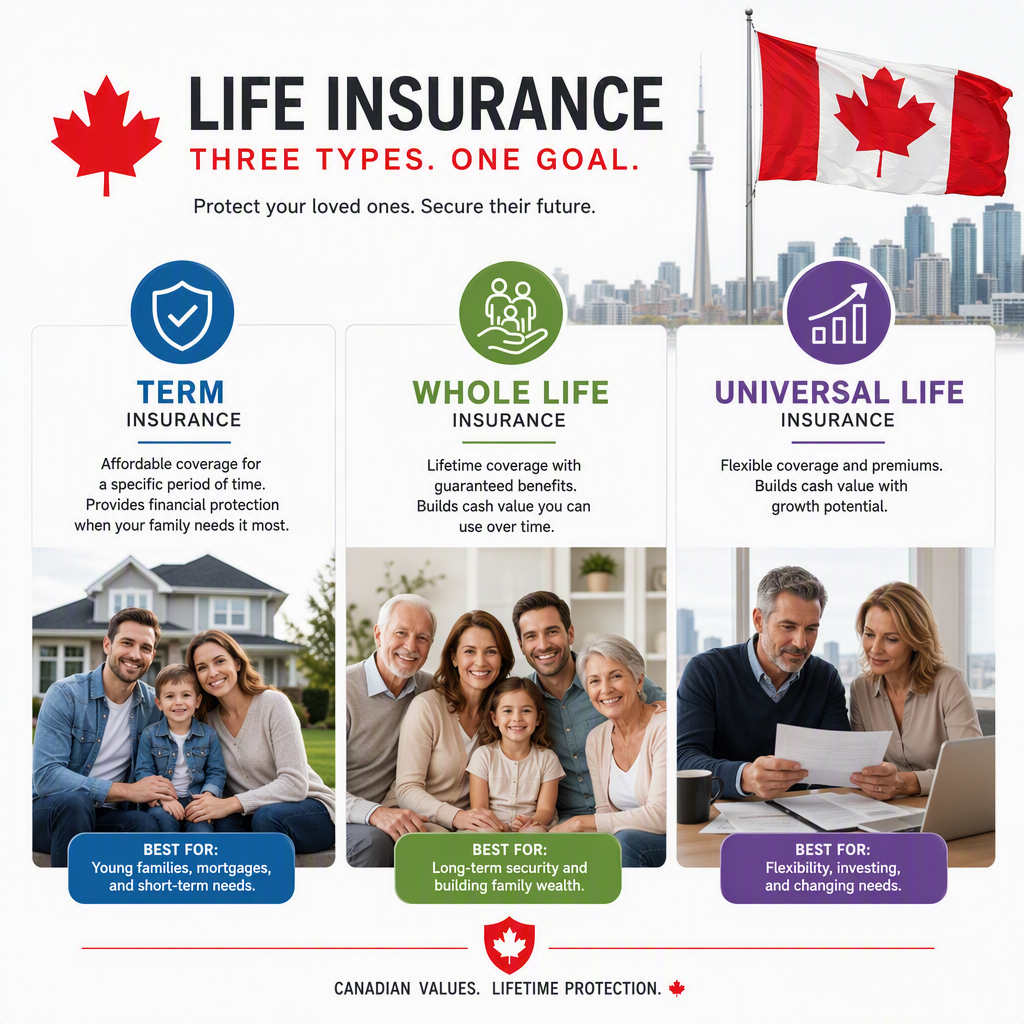
The main types of life insurance in Canada are term life, permanent life insurance, and group life insurance. Under permanent coverage, whole life and universal life are the best known. Each type of policy is made for a different goal, price, and time.
Some plans are simple and cost less. Others are harder to understand and can cost more. There are also special options for couples, people who own homes, and people with health issues. The next parts will go over the main types of life insurance. This way, you can look at them side by side and see what works best for you.
If you are comparing life insurance products, start with the basic split between temporary and lifelong coverage. Term life insurance covers you for a set number of years. Permanent life insurance lasts for life if the policy stays active. Whole life insurance and universal life insurance are both permanent options, but they work differently.
Whole life is usually more stable and predictable. Universal life adds more flexibility, but it can also require more hands on management.

Individual life insurance is a plan that you pick and it is in your own name. You get to decide the coverage amounts, how long the plan will last, and who will be your main loved one to get the money. This helps you match the life insurance to your family, your bills, and what you can pay.
Group life insurance is usually part of your work benefits. One good thing is that your job will sometimes pay all or some part of the insurance. But, this type of insurance coverage has limits. Most of the time, group life insurance will be only about one or two times what you get paid at work.
There is also one more thing to know. Group life insurance does not stay with you if you leave your job or if you stop working. It may stop when you leave, retire, or lose your job. But individual life insurance is more open and can cover you for a longer period of time. This can help you plan well for the future.
Term life insurance is a type of life insurance policy that gives you coverage for a set period. In Canada, the term can be from one year up to 40 years. If you pass away during this time, your family or people you choose will get a tax-free lump sum of money. Many term life insurance policies let you renew or change to another policy later, but keep in mind that the cost often goes up as you get older.
Many people in Canada look at term life insurance first when they need a life insurance policy. This is because the premiums are lower than permanent coverage. Term life is often used to cover a mortgage, help replace your income, or give support to children while they still depend on you. If you think your financial obligations will end in time, picking the right term length is more important than having features that last your whole life.
Term life insurance helps you for a set period when you or your family need your income the most. With this type of life insurance, you pick how long you want the policy and how much coverage you need. If you die during that set period, your family gets a death benefit payment from the insurer.
This insurance coverage helps with big bills. For example, it can cover a mortgage, support childcare, pay school costs, or take care of joint debts. When these things are paid off or get smaller, you may not need as much life insurance coverage.
That is the reason term life insurance is called family life insurance Canada and life insurance for parents Canada. It is also good for life insurance for young adults Canada, since it gives new families coverage that’s also more affordable at the start. When people want to know the best time to get life insurance, it is usually smart to buy it before health problems show up or prices increase as you get older.
Term life policies can be a good choice if you want strong coverage but want to keep the monthly cost low. This is a common place to start for people who have financial obligations that will not last forever and need to stick to a budget. Many young families in Canada like term life because lowered premiums help while their kids are still growing.
This type of plan can work well for the people who own a home, couples who took out a loan together, or anyone who wants to make sure their outstanding debts or funeral costs are paid for over a set period of time. Term life is not the answer for everyone, but it can be a good idea when you expect your needs to go down later.
You might want a term life policy if you:
Permanent life insurance is made for people who want lifelong coverage instead of just having it for a few years. If you keep the policy active, it will pay a death benefit no matter when you pass away. This is not the same as term coverage.
There is more than one type of permanent life insurance. Whole life insurance gives you steady coverage with guaranteed features. Universal life has an investment component and gives you more choice in how you use your policy. These policies cost more. So, they are best when your need for life insurance will last your whole life.
Permanent life insurance gives you lifelong coverage. This means your life insurance can last for your entire life, as long as you keep up with the payments. This type of coverage is good if you want help with things like estate planning, final taxes, or if you have people who may need your support for many years.
Some permanent life insurance policies have a cash value part inside them. Over time, this cash value can grow in the policy. The growth potential depends on the type of life insurance you choose. It might be guaranteed, can change with the market, or depend on how the company runs the policy.
Common features include:
Because permanent life insurance usually comes with higher premiums, you should think about if lifelong coverage matches what you or your family need.
Whole life insurance and universal life insurance both give you permanent coverage, but they work in different ways. Whole life insurance is more steady. You get stable, permanent coverage, and the cash value grows at a rate that is usually promised in your policy. Universal life insurance is more open, and you can change things like how much you pay or how the money is used. But with that extra choice, there are more things to watch and this can be a bit more mixed up.
Universal life insurance also has an investment component. Part of what you pay will go toward the cost of your life insurance, and some of it may go into the investments set up inside your policy. This means you need to keep an eye on how much you put in and make sure your policy is doing well.
Here is the simple split:
Whole life insurance is a type of permanent coverage that protects you for your entire life. This life insurance does not end after a set time like term insurance. As long as you keep your policy active, your loved ones will get a death benefit when you pass away. That is the reason many people use whole life insurance for things like estate planning, helping with final taxes, or leaving money for their family.
Another big part of whole life insurance is the cash value part. As you pay into the policy, some of the money you spend grows inside it over time. Many people like whole life for this reason, because the policy builds up in a steady way, and you keep the coverage. But, keep in mind, whole life costs a lot more than term insurance. So, be sure it fits your needs before you make a choice about permanent coverage.
With whole life insurance, the policy’s cash value grows as time goes on. This happens inside the policy. The cash value is one big reason why the cost is higher than term coverage. The cash value in whole life insurance grows with no tax as long as the lifelong policy is active.
The growth of cash value in whole life insurance is usually slower and more steady than the investment part of universal life. This means whole life is not mainly for people who want to handle and manage their money a lot. It is more for people who want things to be steady and know what to expect, not for people looking to gamble with investments.
You might get to use the cash value through withdrawals or other policy choices. But taking out that money is not free. The information says that you have to pay it back. So, if you are looking at whole life insurance for the cash value, think also about the total cost in the long term. Think about what you want the policy for and if it fits your needs.
Whole life insurance is a type of life insurance that is a good fit for fewer people than term coverage. It can be helpful if you have a need that does not end. This could be goals for estate planning, taking care of someone who will need help their whole life, or wanting to leave a promised inheritance. In these cases, paying a higher cost for lifelong coverage might be worth it.
Your age can play a part in choosing the best life insurance. Some older people may still pick permanent insurance if they want lifelong coverage and can manage the higher cost that comes with it. Many younger adults choose term insurance instead. That is because their needs are more about the short term and they want to keep costs low.
Consider whole life insurance more closely if you:
Universal life insurance is one of the permanent policies in Canada that gives you more flexibility. Like whole life insurance, it can offer you coverage that lasts your entire life. But with universal life insurance, there is also an investment part inside the policy. You pay money into this. A part of that helps pay for the cost of life insurance, and the rest can go into an investment component. Because of this, people often want universal life insurance explained in simple terms before they get it.
This type of plan is flexible, but it can be harder to understand. You may have to keep an eye on how your policy is paid and watch how the investments are doing. If the cash value does not go up the way you want, you may end up paying more later on. So, universal life insurance can work well for long-term goals, but it is not the best choice for every home.
Universal life insurance is a type of policy that gives you a lot of control. It offers permanent coverage and has features you can change to fit your needs. With universal life, you can decide how you want to fund the policy, and you choose how the cash value part is invested.
This may sound good, but it also means you have to stay on top of things. You will need to check your universal life insurance policy every now and then to make sure you have enough cash to keep your coverage amounts where you want them.
This flexibility may give you:
Some people want a policy that they can just set up and forget. For them, this type of policy may feel like too much work. But, if you want more say in your life insurance and want choices, universal life insurance may be good for you.
Universal life insurance can be a good fit for people who want permanent coverage and like to keep track of their policy. This type of life insurance gives you more freedom and lets your cash value grow as time goes on. That can help with some long term money goals.
But there is a downside. Universal life insurance is not simple. These policies often have higher premiums than term life insurance, and if your investments do not do well, you may pay more. So, the flexibility of these plans helps only if you want to put in the time to check and manage your policy.
Here are the main pros and cons:
Besides the main types of life insurance, people in Canada have a few special choices to pick from. These options are mortgage life insurance, guaranteed issue life insurance, and no medical plans. Each of these covers a smaller need than standard term or permanent coverage.
You might hear about critical illness products at the same time, but these are not the same as life insurance. Critical illness plans pay you if you get a covered illness, not after you die. Now, let's learn more about these special life insurance options.
Some people in Canada are scared that their health might stop them from getting life insurance. No medical and guaranteed issue life insurance are made for those who cannot get regular coverage. These plans are good for people who may have health problems. You do not need a medical exam for guaranteed issue life insurance. This kind of life insurance can also be easier to get.
But the coverage amounts for these plans can only go up to around $100,000. This issue life insurance will not replace all your income. People usually use it for small needs, not for bigger things over time.
Key points to remember:
Group life insurance and mortgage life insurance both have a clear purpose, but each one works in its own way. Group life insurance is something you may get at your work, and it can be a helpful part of your benefits. Mortgage life insurance is a plan that connects to your home loan. This is meant to help pay the mortgage if you die.
Mortgage life insurance can sound easy to understand, but the way the money is paid out is different. The payout from this type of life insurance goes straight to the lender, not your friends or family. This means your family can stay in the house if something happens to you, but they will not get extra cash to use for bills or other financial obligations. Also, the amount of coverage from this type of policy gets smaller as your home loan gets paid down, while you might still be paying the same fees.
Here are some key things to remember about the two kinds of coverage:
The best option for life insurance will not be the same for everyone. To compare the types of life insurance in Canada, first think about your reason for getting coverage. Do you want to protect your income for a few years, or do you need help that will last for your whole life? This question can make it easier to pick from different life insurance products.
Next, look at life insurance products to see how much they cost, how long they last, and what features they have. If you don't feel sure, you can talk to an insurance advisor who can explain things in a simple way. The next part will show you some ways to compare quotes and look at policy details.
When you look at life insurance quotes in Canada, do not focus on the price only. A low price can mean you get less insurance coverage. It can also mean a shorter term or have fewer good features. Start by thinking about how much life insurance you need, how long you need to have it, and if it fits your financial situation.
It is also good to look at offers from more than one insurance company. This will help you see differences in coverage amounts, types of plans, and costs. Your age and health can change the price, so compare those for each plan.
Here are simple tips for comparing life insurance:
If you want to look at life insurance Canada options without a lot of stress, you can try using Policy Ninja. It can make the process easy for you.
Insurance costs in Canada can change based on a few main things. It is not just about the type of policy you choose. Your age, health conditions, if you smoke, term length, and how much you want to get all make the price go up or down. Most of the time, people who are younger and in good health pay less for life insurance.
It is good to look at your budget too. A life insurance policy needs to help your family but still let you have cash each month for other things. That is why many people who are younger pick term life insurance. Older people or someone with different needs may look at a permanent life insurance policy or no medical life insurance options. What you choose will depend on your health and what you want.
Insurance costs can be different for each person because insurance companies look at risk. Age is a big part of this. In most cases, the older you are, the more you will have to pay. Your health will also change what you pay. If you have some medical problems or if you use nicotine, your price can go up. This is why the best time for many people to get life insurance is when they are young.
How much coverage you get and the term length are also important. Having more coverage will make your insurance costs higher. If you pick a 30-year term instead of a 10-year term for the same amount, it will cost more too.
The main things that change your price are:
A good policy will give your family financial protection but should not be hard on your budget. This is why you need to plan your spending. First, think about what things your family would need if you were not there. Next, look at how much you can pay each month without stress.
Many people choose term coverage. It helps keep your insurance costs down, and you still get good coverage amounts. If you want coverage for your whole life, you can look at permanent policies, but just know they cost more. These higher prices may be okay if your budget can deal with them for many years.
A simple way to handle your money is to:
This simple plan makes it less likely you will not have enough coverage or pay for more than what you need.
Many people in Canada buy life insurance quickly. They do not always check if that insurance coverage fits their needs. This can cause problems like missing financial protection or paying too much each month. Taking some time to plan can help stop these problems.
People also make another mistake. They think all life insurance plans are the same. But term life, whole life, and group coverage are different. Each one gives help for different reasons. The next two parts will talk about mistakes families can make when they look at different life insurance options.
One of the biggest mistakes people make with life insurance is picking a policy before thinking about their family's needs. If there are people who count on your income, your life insurance should be enough for them. This is also true if you have a mortgage, childcare, or any other long-term support your home might need.
Your money goals matter too. Some people just want term insurance for a time in life when they have young kids or a lot of debt. Other people may need life insurance for life, like for estate planning or someone who will always need help. If you skip this part, your plan may not get everything covered.
Before you look at different life insurance plans, take some time to think about:
It can be easy to pick the first life insurance quote you see that seems cheap. But taking just one quote does not show you all the choices out there. Prices, what you get, and how you can be approved are not the same for each company, even if the insurance coverage looks a lot like the others at first.
If you look at more than one choice, you will find it is easier to get the best option for you. It is not only about the cheapest price. You can also see when one plan offers better insurance coverage or gives you more choices for what you want to do.
It is smart to:
That is why many people use online tools to look at different life insurance choices for Canada in one spot.
The biggest question for many people in Canada is whether to pick term life insurance or permanent life insurance. Both will help protect your family, but there are some big differences. Term life gives you protection for a set period of time. Permanent coverage, like whole life, gives you lifelong coverage.
It is important to pick the right policy for you. Think about what you want to protect, how long you need this protection, and what you can spend on this. If you are asking about term vs whole life insurance in Canada, this guide is a good place to begin.
Term life insurance is usually the lower cost option. It offers protection for a fixed coverage length, such as 10, 20, or 30 years. Permanent policies cost more, but they can stay in force for life and may offer features like cash value.
The tradeoff is simple. Term is easier to understand and often better for temporary needs. Permanent policies can offer lifelong support, but they come with higher premiums and, in some cases, more complexity.

People make different choices at each stage of life. Many young adults and families keep an eye on their budget, watch their debt, and aim to protect their income. For them, term life insurance is often a good fit. This is because it gives you coverage for a set time at lower premiums and offers strong value if your needs are temporary.
As we get older, people sometimes focus on estate planning, taxes, or caring for family members who may need help for many years. This is when permanent coverage can be helpful. But permanent life insurance is not always the best answer for everyone. Let your goals and budget help you choose what is best.
Here is a simple way to look at life stages and term life insurance:
Getting life insurance quotes in Canada is simple if you know what to give. Most insurers or tools will ask about your age, the province you are in, sex at birth, smoking, and some health facts that can change prices. This information helps an insurance company guess the cost of your life insurance policy and show which type of coverage works for you.
After you give these details, you can then look at different plans. You will want to match plans by looking at price, term length, and how much coverage you get. This is a good time to think if you need a personal policy, want more than what work offers, or hope for a life insurance policy that will last as long as you need. When you go over the choices, the steps to apply to a plan will feel easier.
The steps to apply for life insurance are often easy. First, get your personal details ready and think about the coverage amounts you want for your life insurance. Next, look at different life insurance plans from more than one provider or place.
Some life insurance type of policy options may need you to answer health questions, while some may need a medical exam. There are others, like guaranteed issue coverage, that do not ask for a medical exam. If you do not understand something, an insurance advisor can help you know what will happen before you finish your application.
The usual steps are:
Looking at life insurance options can be hard. Each insurance company talks about what they offer in a different way. PolicyNinja helps make this simple for people in Canada who want to check and compare plans. You do not have to guess which policy is right for you. You can see options in one place and that gives you more time to think about what matters for your family and budget.
With Policy Ninja, you can do things like:
To sum up, when you understand the many types of life insurance in Canada, you can make better choices to protect your family's money in the future. There are term, permanent, and special plans such as no medical and guaranteed issue life insurance. Each one is made for different people and life situations.
You need to think about your age, health, and budget when you look at the options. By looking at different life insurance quotes and policies, you can pick the one that is right for you. For an easy way to compare your options and get a free quote, go to PolicyNinja.
Yes. You can have more than one type of life insurance in Canada. Some people have both term life and permanent life insurance. Others get their own coverage, even if they have some at work. This helps you make sure your coverage amounts fit what you need at different times.
If your needs change, you can look at different ways to adjust your type of coverage. You might do this by buying a new policy or adding another one. If you have term insurance, you can also talk about conversion options. Be sure to speak with your insurance company. Review your coverage amounts when your debts, family, or budget go up or down.
There is not one best option that works for all. There are different types of life insurance, and many people in Canada pick term life insurance because it is affordable. Permanent life insurance can be good for those with needs that last a long time. The best choice depends on your age, health, debts, dependents, and your financial situation.
If you want to look at the types of life insurance Canada has, you should first think about your needs, how much you want to spend, and how long you need the coverage. Then you can look at life insurance products and compare them. An insurance advisor or a website that lets you compare can help you check different life insurance plans. This will help you find the life insurance coverage that is right for you.
Want a simpler way to compare coverage? Get a free life insurance quote through PolicyNinja at https://www.policyninja.co/. This is a good place to look at different insurance plans, check coverage amounts, and find the best option for you. If you are searching for a life insurance broker near you, this can be a smart place to begin.

Cindy David, CFP, CLU, FEA, TEP, is President & Estate Planning Advisor at Cindy David Financial Group Ltd. in Vancouver. A recognized leader in wealth management and estate planning, Cindy guides clients with strategic, tax-effective solutions while championing innovation and women’s leadership in the financial industry. She is the former Chair of the Conference for Advanced Life Underwriting (CALU) — Canada’s professional association for senior life insurance and financial advisors that advances education, advocacy, and best practices in advanced planning and public policy.


