


If your last paycheck was gone quicker than you thought it would be, 2026 can be the year you change that. You do not need a finance degree to save money. You do not have to use a tough spreadsheet every day either. The main thing you need is to build a few smart habits you can keep up with. You also need to know what you want your money to do.
The ten ideas below are made for real life. They help real people. You do not have to be great with money or have everything sorted out already to get started. You can pick just one, pick several, or try all of them. If you do, by the end of the year, you will likely have more money saved and feel better about your money going forward.
As the new year begins, it's time to take steps to make your financial life better. These smart saving strategies can help you reach your financial goals.
Are you ready to let your money do more for you? This is not about being cheap. It is about making smart money choices. When you make good financial decisions, you help build the life you want. By looking at a few important things, you can turn small changes into big steps toward your savings goals.
These ten strategies are more than just a list. They act like a playbook you can use. There is advice from setting up savings automatically to thinking about the long run with your investments. Each idea gives you clear steps that you can try right now. Let’s take a look at these simple ways you can save more in 2026.

The best way to save every month is to set up automatic transfers. This means money moves on its own from your checking to your savings account right after you get paid. When you do this, you make sure to save first, just like you would for your rent. By treating saving like a bill, you do not have to think about it, and your money will grow over time.
This way helps you have more control of your money. You get used to living on what you have left, and this keeps you from spending on things you do not need. It is a simple and good habit that keeps working for you, even when you are not thinking about it. For better results, open a separate account for your savings. It is even better if this account is at a different bank. This can stop you from taking money out unless it is really needed.
You can begin with something small. Try setting up an automation for just two or three percent of your paycheck. Then, you can raise this amount every six months. This way is a big part of any personal finance plan. It helps you build a good habit in your personal finance budget. It keeps your money safe for the future, and you do not need to always push yourself to save.
A budget is not meant to hold you back. It helps you plan your money, so you can use it where you want. When you make a clear plan for spending, you can see where your money is going. You know exactly how your cash flow fits with your clear goals. In personal finance, this is an important tool. It turns managing money into a simple process, not just guessing. A budget helps you spot spending habits that don't help you, so you can spend better.
Track all your spending for 30 days before you change anything. This helps you see where your money goes. It is important to catch the way you use money. A daily lunch of $10 adds up to over $2,400 a year. You could use that money to start an investment account. Budgeting apps can now help you track spending without much effort. They make it simple to know what you do with your cash.
To start with a simple framework, you can follow these steps:
Small charges for things like streaming, the gym, and subscription boxes can hurt your financial plan. You might feel that these little monthly expenses do not matter much. Over a year, though, they add up and can take a lot out of your money. If you go back and check these payments often, you will see where you can save cash fast and help your budget.
This is not about making you stop doing what you like. It is about thinking before you spend. Many people have more than one membership or subscription they do not use. These can add up to thousands of dollars in a year. If you cut even half of these, you will have more for your savings. The good news is you get a big change in your cash flow right away when you do this.
Here’s a practical hack to reduce these costs:
For many homes, food costs come right after what you pay for housing. That makes it a good place to try to save money. If you shop smart for groceries and plan your meals, you can fight overspending. Plan what you will eat each week. Write a full shopping list. Use that list to buy only what you need. This helps you take charge of how much you spend on food, so your spending habits get better. The store’s ads or hunger will not control you.
This way of doing things goes right at one big part of your monthly expenses. The results are quick and they matter a lot. A family can save more than $150 each month by planning meals based on weekly discounts and using store brands, which are often about 30% less. These small changes can make a big difference.
Here are some simple and fun tips to help you get the most out of your grocery shopping:
High-interest debt from credit cards or payday loans works like a heavy anchor on your money. It drags down your net worth and makes it hard to move up. When you pay interest, that dollar isn't going into savings or investments. Getting rid of this debt lets you keep more of your income, which is the best way to build your net worth and save money.
Think of it like this. When you pay off a credit card that has a 20% APR, you are getting a steady 20% return on your money. There is no investment that will always give you that much. It is good to focus on debt payments when you have high-interest debt. This helps you build a better base for your money. Being free from debt has been tied to less stress and more freedom with your money.
You can pick a way to pay off your debts, like the debt snowball method. In this way, you pay off your smallest balance first, which gives you quick wins. Or, you can try the debt avalanche method, where you pay the one with the highest interest first. This can help you save the most money. No matter which one you use, make sure to pay the minimum on all your other debts. Send any extra money to the debt you want to clear. Also, stop getting more into debt by freezing your credit cards.
One way to save money that many people do not think about is in your employee handbook. The benefits that your job gives you are a big part of your total pay. If you do not make the most of these, it is like saying no to getting a raise. A lot of companies offer things like 401(k) matching, help with taxes, and wellness programs. These are set up to help you feel good about your money and health.
If your employer gives you a 5% match on your 401(k) and you make $50,000, you get an extra $2,500 for your retirement each year. A health savings account (HSA) or a Flexible Spending Account (FSA) also can help a lot. With these accounts, you pay for medical costs before taxes are taken out. This gives you a quick 20-30% savings on what you spend for your health. A savings account like this can help your money go further.
Here’s how to make these tips work for you:
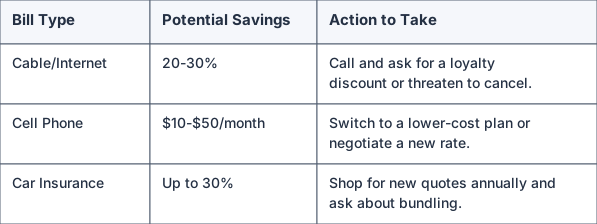
Many of your big monthly expenses, such as internet, insurance, and cell phone plans, do not have to always stay the same. You can try to get a better rate by talking with these companies. A lot of places give a good deal to new customers. But if you ask, they might offer the same deal to people who have been with them a while, especially if they feel you may leave for another company. Getting a better rate this way can help to lower your monthly expenses.
This way lets you put in just a little bit of time to get a big reward. A few calls can help you save hundreds of dollars every year on your utility bills. For example, if you check new auto insurance quotes, you might save about 30%. That could be more than $500 in a year. To do this, get quotes from other companies and use them when you talk to your current provider.
The best way is to be polite but clear. You can say, "I have been with you for a long time. I got a better offer from someone else. I want to stay. Can you offer the same deal?" Here is a look at how much you could save:
While cutting costs can help, there is only so much you can save. To get more, you need to earn more. This can mean moving up in your job to get a raise, or starting a side hustle that brings in passive income. These extra ways to earn will help you now. In the long run, your money grows even more.
Putting in a little extra effort can help you get new opportunities. It can also change your money life in a big way. For example, if you do some freelancing and work just 10 hours a week at $50 an hour, you could make over $25,000 more in a year. This extra cash can boost your savings, help you pay off debts faster, and give you more chances to make new investments.
Here are some ways to increase your income:
Impulse buys can eat away at your budget without you noticing. The 30-day rule is a great way to help with this. It is simple but it works well. When you feel like buying something new, wait for 30 days before you buy it. This gives you time to see if you really need it or not. If you still want it after a month, then it might be more than just a quick wish. Doing this is a good habit to start in the new year.
This way is very good for helping you change your spending habits. Most people spend a lot of money each month on things they didn’t plan to buy. If you use this rule, you can cut out more than half of those extra costs. You might even save thousands in a year. This method gives you time to look for better prices, think about if you really need the item, and see if you feel the same after some time goes by.
This way, you bring mindfulness into how you make financial decisions. If you feel like buying something, add it to a “wait list” with the date. After 30 days, look at it again. You will see that the urge to buy has often gone away. For big purchases, you can wait even longer, like 60 or 90 days.
Saving money is a good first step. But to really grow your wealth over time, you need to start investing. When you invest, your saved money gets a chance to grow. The power of compound interest means that not only do you earn money on what you put in, but your earnings also start to make even more money. Over the years, this can build up and make your financial life much stronger.
The gap between getting started early and waiting is huge. Time can be your best tool when you look at your retirement plan. A person who saves $300 each month from age 25 could end up with over $1 million by age 65 if there is an 8% average return. But if you wait ten years to get started, the money you have at the end may drop by more than half.
To get started, first put money into tax-advantaged accounts like a 401(k). Make sure you get your company match. After that, look at opening an investment account such as an IRA. You do not need to be an expert who picks stocks. Low-cost index funds help you spread your money and have given good returns in the past. Try to automate your investments. This way, you will build up your retirement savings in a steady and easy way.
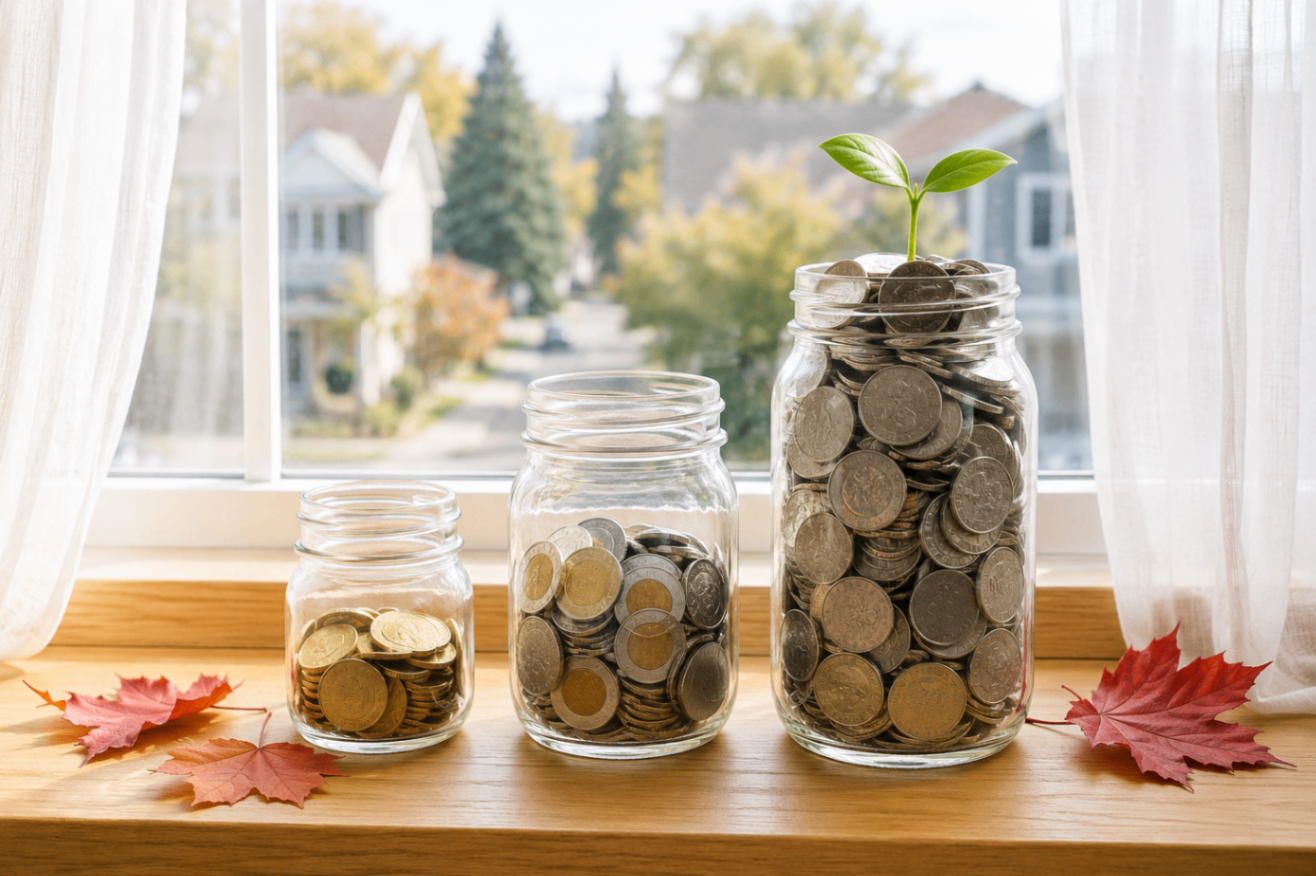
If you live in Canada, you can find special ways to help grow your savings. There are discounts that are just for Canadians. You can get more by using loyalty programs and opening certain accounts here. When you use these money-saving tips, you will get closer to reaching your savings goals sooner.
As you get ready for the end of the year and what comes after, using these steps can help you feel better about money. Let’s look at some easy tips that can help Canadians save more in 2026.
A great way to start the new year is to use loyalty programs and Canadian-only discounts from stores, grocery shops, and service providers. PC Optimum, Air Miles, and Scene+ are some of the most common programs. They help you save money on things you buy every day, like groceries and gas. This can also help with any unexpected costs that come up.
Many Canadian companies give discounts to seniors, students, and people in some job groups. You should ask if there is a discount before you pay. These small savings will add up as time goes by. You get more money to use for your financial goals.
To maximize these benefits, consider these tips:
Cashback apps and reward cards help you earn some money back when you shop. In Canada, you can use apps like Rakuten.ca and Checkout 51. These apps give cashback for online shopping and for buying groceries. Many credit cards also give you points or give back a small part of what you spend. If you use these the right way, you feel like you get a discount every time you buy something.
The good news is that if you use reward cards the right way, you can build a good credit history. You can also help your credit score. The best thing to do is pay off what you owe each month. This way, you can stay away from extra interest charges. If you pay interest, it could cancel out the rewards you get.
Here’s how to use these tools effectively:
Canada has strong tax-advantaged accounts that can help you reach your financial goals. The Registered Education Savings Plan (RESP), Registered Retirement Savings Plan (RRSP), and Tax-Free Savings Account (TFSA) are great ways to save for the future. These savings account types are important for building wealth over time. It is good to know how these work and how much you can put into each account. By using these for your retirement savings and other needs, you can make the most out of your money.
The government gives you some help when you save with retirement accounts. For example, there is the Canada Education Savings Grant (CESG) for RESPs. With this, the government matches part of what you put in. The RRSP lets you take a tax deduction for your contributions. The TFSA helps your money grow because you do not pay any tax on your investments. These retirement accounts can help you save money in a better way.
To make the most of these accounts:
As you look at the start of the new year, it is a good time to make some money plans. This will help you get ahead and feel more driven. When you set important financial goals, like building an emergency fund or growing your net worth, you give yourself a clear path. Staying motivated is key if you want long-term success.
If you make a good plan and keep track of how you do, you will be able to keep your drive going all year. These simple tips will help you build strong roots, set goals you can reach, and hold on to good saving habits. This will help you keep your financial goals in focus.
One of the best things you can do in your financial life is to set up an emergency fund. This gives you a safety net when unexpected expenses pop up. It can be for things like your car breaking down, a medical bill, or losing your job. Without an emergency fund, just one surprise can hurt your financial life and make you fall into high-interest debt.
A good goal for your emergency fund is to have enough to cover three to six months of expenses. You should include all the costs you need to live, like rent, utilities, groceries, and transportation. If you know you have this money set aside, it helps you feel at ease. It also lowers the stress that may come up in times of money troubles.
If you feel that saving several months of expenses is too hard, try starting with a smaller goal. Aim for $1,000 first. When you reach that amount, you can keep adding to it. A good way to grow your savings account is to set up automatic transfers. Put the money into a separate, high-yield account. This way, you build your fund over time without having to think about it.
To keep going, it helps to set clear savings goals. If you just say "I want to save more," it is hard to know where to start. The best way is to make goals that are easy to see, measure, and hit. You want your savings goals to also fit you and have a deadline, like the end of the year. One clear goal you can set is "I will save $5,000 for a down payment by the end of the year." This gives you a target to work toward.
Having clear goals is an important part of a good financial plan. They help you know what you are working toward. Clear goals also give you reasons to make smart choices about how you spend money. Keeping track of your progress is also key. When you see how much you have done, you feel more motivated. It helps you build good habits and feel more in control of your money.
You can use a simple spreadsheet, a budgeting app, or a notebook to keep track of your savings. Celebrate small wins, like when you save your first $1,000 or pay off a small debt. This positive reinforcement helps you stay on track. It also lets you build up momentum as you work toward your bigger financial goals.
The end of the year is a good time for you to look at how you are doing with your money. It helps to see where you stand and to plan for the coming year. If you want to keep your good saving habits in the new year, try to make these habits a regular part of your day. Being consistent matters more than getting everything right every time.
Don't let one small mistake ruin all your plans. It takes time to build good habits that last. Take some time to look at what worked and what did not. This will help you make your plan better going forward. Try to make as many things in your financial life automatic as you can, like moving money to savings or paying bills. This will help you avoid problems and make it easier to stick with your goals.
Here’s how to ensure your resolutions stick:
Saving money in 2026 does not feel too hard if you have a plan and stay on track. If you try simple ways, like setting up automatic savings and making a budget that fits you, you can make big progress with your money. Look for deals made for Canadians and put as much as you can into your savings accounts—that helps even more. Make goals that you can reach and keep an eye on how you do. This is what helps people make good money habits. If you want help or feel stuck, ask someone for support. Try a free trial or get a talk with an expert. This can help you start making your money goals real.
To save more in the new year, try to set up automatic transfers to your emergency fund and your TFSA. Make a budget to see where your money goes. Plan how you will pay off your credit card debt that has high interest. Doing these things will help you to have a better financial life and reach your savings goals.
Meal planning helps families spend less on food. Food takes up a big part of their monthly expenses. You can set up automatic transfers to savings to improve cash flow. There is no extra effort needed. These simple spending habits are important. They help you make a good financial plan. A good plan helps you reach your financial goals.
If you are new to personal finance, begin by following your spending for a month. This helps you see where the money goes. After that, use the 50/30/20 rule. You can make a simple personal finance budget and set clear goals for your cash flow. The good news is, a little extra effort can make things much better.

Cindy David, CFP, CLU, FEA, TEP, is President & Estate Planning Advisor at Cindy David Financial Group Ltd. in Vancouver. A recognized leader in wealth management and estate planning, Cindy guides clients with strategic, tax-effective solutions while championing innovation and women’s leadership in the financial industry. She is the former Chair of the Conference for Advanced Life Underwriting (CALU) — Canada’s professional association for senior life insurance and financial advisors that advances education, advocacy, and best practices in advanced planning and public policy.


