


Do you ever look at a financial planner's name and see letters like CFP, CFA, or ChFC after it? These letters mean a lot. They show the person has spent years to learn and practice. A financial planner with these letters has followed tough rules and gained good work experience.
Financial planning designations tell you what an advisor can do and how much they know. When you understand these labels, you can choose the right person for your needs. It also helps you think about where you might want to go if you want to get into the field of financial planning.
This guide tells you about the main financial planning credentials. It shows you what each needs and what they mean. This way, you can feel sure as you go on.
In Canada, there is a big range of job titles in financial services. These titles let people see which financial professionals have learned the right things and act by certain rules. The titles also help you know which planner got the right education and follows good practice.
From full financial planning to targeted investment management, each professional designation shows what someone can do. Knowing these changes helps you pick the right person for your needs. We will talk about why these names matter and who controls or manages them.
A professional designation means the person has learned a lot about money. It shows they have spent time studying and taken hard tests. They also have work experience. When you see their credentials, you know they can help you with your financial plan. These things make people feel sure that their expert has the right knowledge.
Also, these titles are given by groups that look into the background of these people. They make sure that everyone follows a strong code of ethics. This means you get financial advice that is good for you and really helps you. These people must keep to these rules if they want to keep their spot. This gives you more safety and helps you feel sure about the advice you get.
The main goal of a professional designation is to help people feel safe and sure about the skills of the person they work with. If you work with someone who has a professional designation, you know they have spent time and put hard work into their job. They want to give good advice and help keep the financial industry's values high.
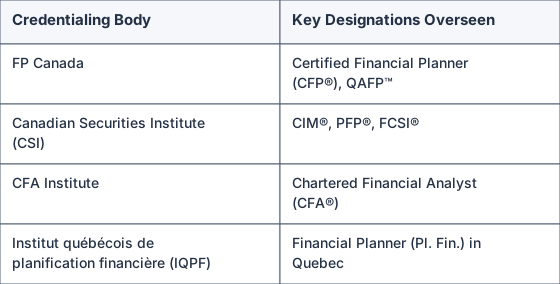
In Canada, there are a few trusted groups that give rules on how someone can be a financial planner. They say what things you should know, what work experience you need, and how you should act when doing your job. FP Canada is one group that most people know for this. It gives titles like Certified Financial Planner (CFP®) and Qualified Associate Financial Planner (QAFP™) here. To read more about this, you can visit the FP Canada website.
Groups like the Certified Financial Planner Board of Standards in the U.S. and the CFA Institute play a big part in keeping trust in the jobs of financial planner and certified financial planner. The CFP Board works to make sure that each certified financial planner does their work the right way. The CFA Institute also helps set rules for this kind of work. Both groups help people feel good about trusting someone to give them advice on money.
Here are a few groups that take care of credentials. These groups also handle the titles that people get:
Many people use the words "financial advisor" and "financial planner" in place of each other. But these roles can be different. A person's title tells you what kind of financial services they offer best. They may work in overall planning. Or they may give advice about investments.
The experience requirements and tasks can change a lot from one credential to another. A financial planner works to help a person plan out all parts of their life. A financial advisor tends to help people with their investments. We will go over what each job does and the rules each role must follow.
The scope of practice is what makes someone different in the financial services industry. A financial planner with a CFP® title will often do comprehensive financial planning for you. As part of this, they look at your whole financial picture. Then, they make a detailed financial plan for you.
A financial advisor is a person who works in a special job. They help you with advice, but it is usually about one area of your money. A financial advisor may help you manage your investments or give you ideas on what products to buy or sell. The name "financial advisor" tells you what they are good at.
Here's a quick breakdown of their typical focuses:
In Canada, there are rules in place to keep people safe and to make sure the wealth management field is fair and honest. The titles "financial planner" and "financial advisor" used to be given to many people in different ways. Now, the provinces want to protect these names by letting only those who are qualified use them. Names like CFP®, PFP®, and CIM® are trusted and respected across the country.
These well-known titles are given by groups that watch to be sure the code of ethics is used and that people still learn over time. People who hold these titles must always be honest about what they say and do. They have to put the client first in all cases. This helps you feel more trust in their help.
Having a title that many people know tells you that the person has reached a high spot. This can happen in Canada or in other countries. If you want someone to help with your money, check if they have the right papers or credentials. It is good to find a person who follows all the main rules for money in Canada. This helps you feel sure that they will do what is best for you.
The Certified Financial Planner (CFP®) is one of the top titles in the financial services industry. A financial planner with this title shows strong skill in financial planning. FP Canada gives out this title in Canada, and the CFP Board does the same in the United States. Having the CFP® title means you know a lot about comprehensive financial planning. It lets people know you are serious about your job in the financial services field.
A CFP® professional is there to help with all parts of your money life. You can get help with budgeting, investing, retirement, and estate planning. They learn in a way that covers every area, not just one thing. This is why they are different from people who have other finance certificates. We will talk about what a person has to do to be a CFP® and see the skills they get.
A good start matters a lot for people in financial services who want to get certified. Most, like Certified Financial Planner (CFP) and Chartered Financial Analyst (CFA), want you to have a bachelor's degree first. You need work experience in the financial services industry, too.
You have to take courses in financial planning, risk management, and portfolio management. After these courses, you need to pass a hard exam. This checks if you are ready. All through the steps for certification, you must follow ethical standards and best practices. This matters to everyone in the job of financial planner or financial analyst.
Becoming a CFP® professional is not only about financial analysis. You have to learn necessary skills too. The training teaches you a lot. It helps you get better at your technical skills. It also teaches you how to talk and work with people. With this mix, planners can handle tough money problems in a clear and caring way.
The experience requirements for the CFP® help make sure that people can use what they know in real life. They practice things like risk management, investment strategies, and estate planning. A key part of the training is behavioral finance. This helps people see how clients make choices and guide them as markets go up or down.
Key competencies developed include:

The Chartered Investment Manager (CIM®) is a good option in Canada for those in portfolio management and investment management. The Canadian Securities Institute (CSI) offers this title. Canadian securities regulators accept CIM® and view it as strong proof that someone can handle client portfolios well.
The CIM® focuses on investment management. A Chartered Investment Manager works with clients to decide what to do with their investments. In the financial services area, let’s see what jobs you can get with a CIM® and find out what steps you need to take to earn this important title.
Holding the CIM® designation is good for getting jobs in asset management. The main job you can get is being a portfolio manager. A portfolio manager handles investment portfolios for clients. They can choose what to buy and sell without needing approval each time.
CIM® holders can do more than be a portfolio manager. They can also take on jobs as a financial analyst and an investment advisor. The skills and knowledge they get in investment strategies and market analysis help any company. The experience requirements for CIM® holders make sure they are ready to deal with hard parts of managing complex portfolios.
Approved roles for CIM® designation holders often be:
Getting the CIM® designation is easy for people who want to be financial professionals. First, you take the core courses from the Canadian Securities Institute. These core courses teach the basics of investment management and portfolio management. Then, you need work experience in the financial services industry. Most people need at least 3 years of work experience.
After getting work experience, you can apply for certification. If you pass the exam and agree to follow the code of ethics, you will join a group of skilled financial planners. This group works with clients so they can reach their goals.
While the CFP® and CIM® are big names, the financial services industry has many more important certifications. These let people in financial services find their place in different areas of financial planning. Some let professionals help high net worth clients. Others focus on personal financial management.
Each certification has its own rules and helps you learn new skills. If you want to get a financial planner with the right skills, you should look into these options. People who work in this field can also find a special job path for themselves. Next, we will talk about Personal Financial Planner (PFP®) and Fellow of CSI (FCSI®).
The Personal Financial Planner (PFP®) is a trusted title in Canada. Big banks and other financial groups feel good about this credential. The PFP® focuses on personal financial planning. A financial planner with this certification learns how to look at someone’s money from every angle. Someone with the PFP® can make a comprehensive financial plan for you.
To get the PFP®, you need to follow a set learning path from the Canadian Securities Institute (CSI). This includes taking several courses and passing a big final certification test. There are experience requirements too, like with other top designations. This makes sure that people who get the PFP® know wealth management in real life. They can also give good financial advice.
The PFP® is known in the financial planning field. It shows that a person has the skills to help with tough money problems. The PFP® proves that a person wants to keep high standards. It also shows that they will give good and honest financial planning help to Canadians.
The Fellow of CSI (FCSI®) is the highest award in Canada's financial services industry. The Canadian Securities Institute (CSI) gives this to the best people in the field. People chosen for this have strong leadership, good values, and show real commitment. If you want to be an FCSI®, you must already have a well-known designation like PFP®, CIM®, or CFP®.
Besides the FCSI®, there are other names to show that a person has special skills. The Chartered Life Underwriter (CLU®) is for someone who knows a lot about life insurance and estate planning. The Certified International Wealth Manager (CIWM) is for those who help clients with a lot of money. It is also for clients that have needs in other countries. Both need you to finish some core courses. They get respect in the field on their own.
These top certifications show that a planner is very committed to their job. They tell you that the planner has worked harder than most people to learn in the financial services industry. It does not matter if they help you with a financial plan or bigger money things. These marks say they really know their work in financial services.

Picking the right professional designation in financial services matters for your job future. You should think about your own career goals and which part of finance you want to work in. Every designation has its own unique needs and focus. Some help in financial planning. Others are more for investment management. Choose the one that will let you do what you want in the long run.
Think about what kind of experience requirements you need and who you want to work with. Do you want to help families by making full plans, or do you feel that portfolio management is better for you? Knowing what you want for yourself is the first step to picking the right title. This will help you reach your goals.
To match your career goals with a designation, you should begin by choosing the route of the industry that you like most. If you want to help clients with every part of their finances, the CFP® designation is a good choice. Its full curriculum is made for jobs that need all-in-one planning skills.
If you feel excited about investments and want to work in portfolio management, the CIM® is a better choice. This option is made for people who want to be portfolio managers or for those who want to work as investment analysts. In the same way, if you feel like you want to work in a particular field, such as handling high-net-worth clients, you could get a CIWM after you get some basic experience.
To make your decision:
Yes, you can have more than one financial planning designation at the same time. This can be very good for you. When you have different certifications, you show clients that you know a lot. You can also offer more full services. For example, if someone has both a CFP® and a CIM® designation, they can make a strong financial plan and also take care of investment portfolios well.
Having more than just one credential shows that you want to learn the best practices in the industry. High net worth clients often look for this, as they may have a lot of money and complex needs. They want you to have several ways to manage their finances. The work experience you get from each designation can help you see how things work in real life.
Benefits of multiple certifications include:
Starting on the path to get a financial planning badge means you need to finish some financial planning courses. Now, it is more simple than before to find ways that fit your life. A lot of groups and schools give online programs. You can look at lessons when you want, so you also can keep up with work and other things.
These programs help you get the core courses you need for certification. You learn the main skills to make a good financial plan and to pass the final exams. You can take in-person classes if you want a set schedule. If you like to learn at home, there are online options. So, you will find a way that works for you.
In Canada, you can find many ways to become a financial planner. There are several programs you can choose from to get your designations. The Canadian Securities Institute (CSI) gives you some good online programs. These let students work toward PFP®, CIM®, and FCSI® designations. The programs are a flexible choice. You can do the core courses at a time that works for you.
FP Canada gives many schools the chance to offer online and in-person classes. These classes help you learn what you need for the CFP® certification. A lot of universities and colleges in Canada partner with groups that handle credentials. They include financial planning courses in their business and finance diplomas.
Some available options include:
The right title in financial planning tells you what the advisor knows and what rules he uses. It can show you the area he works in the most. A Certified Financial Planner (CFP®) or Chartered Investment Manager (CIM®) are two titles that stand for different skills and goals.
If you want to become a financial planner, or need help with your money, knowing these titles can help you feel sure about the advisor you choose.
Credentials matter, but you need honest and fair advice too. Policy Ninja gives you both. A top financial advisor in Canada made Policy Ninja for Canadians. It helps you look at plans from the best insurance companies in the country. You can choose what works for you. You do not feel pushed to buy or face any hard sales tactics.
Get your free quote in 60 seconds and keep safe what matters most. It is easy with us.
In Canada, the Certified Financial Planner (CFP®) is known as the top professional designation for a financial planner. A CFP® is the most well-known title in the financial services industry for someone doing financial planning. It shows that the person has strong skills and sticks to high ethical standards.
Yes, a financial planner can have more than one certification. Many people look to add more designations to build their work experience. For example, a person may get a CFP® and a CIM®. This can help them give both financial planning and strong wealth management to their clients. Having several certifications shows they put in the work and care about what the clients get. A mix of certifications can also help them give more complete and comprehensive financial planning.
Financial planning designations teach people many skills. People learn to do investment analysis. They understand retirement planning and risk management. A strict code of ethics shows how to make choices. A work experience requirement helps people practice what they learn. It lets them offer good financial advice.

Cindy David, CFP, CLU, FEA, TEP, is President & Estate Planning Advisor at Cindy David Financial Group Ltd. in Vancouver. A recognized leader in wealth management and estate planning, Cindy guides clients with strategic, tax-effective solutions while championing innovation and women’s leadership in the financial industry. She is the former Chair of the Conference for Advanced Life Underwriting (CALU) — Canada’s professional association for senior life insurance and financial advisors that advances education, advocacy, and best practices in advanced planning and public policy.


