


You get a benefits package from your boss on your first day at work. Inside this pile of papers, there is a life insurance plan. This is usually for one or two times your yearly pay. It can feel like it is enough. A single 25-year-old with no debt will be fine most times. A 38-year-old who is paying off a house, has two kids, and a partner who needs the money, may not feel the same. A year’s pay can go quick for him or her. The harder truth is most group life insurance tied to work will stop when you leave the job. This guide will show you what your group benefits and life insurance cover, where you might feel short, and how to know if you want more as a Canadian employee.
Here’s a fast look at the main points we will talk about:
Many people in Canada count on their employee benefits. These can give you the health and money help you need. A group benefits plan, with things like health insurance, life insurance, disability insurance, dental care, and vision care, is an important part of what you get from your job. The insurance plans can make it easier for you to deal with surprise health costs. So, you feel less worried and can focus more on your work.
But, you need to know the details about your group insurance. These health benefits are good, but they have their own rules. They also come with certain limits and the cover may not be for everything. Here is a closer look at what is usually in these group insurance plans.
Group benefits insurance is a plan that a company buys for its workers. It gives health coverage and some other benefits. This helps with costs that are not paid for by the government health plans. The plan is an important part of your employee benefits package.
The process is simple. Your employer works with an insurance provider to make a group insurance plan. You, as an employee, join this plan. The cost is usually split between you and your employer. When you have an expense that the group insurance covers, you send your claim to the insurance provider. They will pay you back for what you spent.
This system helps you and your family stay protected if there is a medical emergency or a health problem that lasts a long time. You get better access to healthcare, and the costs feel easier to handle. It is a good way to keep your health in check without having to pay a lot of money from your own pocket.
Most of the time, group insurance is for full-time workers. A lot of firms have some eligibility requirements you need to meet. For example, they may ask you to finish a probation period before you can join the group insurance plan or get the employee benefits.
Part-time workers may not always get to be part of the group plans. Some companies do not let them join these plans, but it depends on the employer. Also, if an employee is on unpaid leave, their coverage may stop or end, based on the rules of the company.
It is common for these plans to cover your family members, like your spouse and children. If you add other family members, there can be an additional cost for this. Sometimes, you and your employer may both pay this extra amount. You should always look at your plan details. This helps you know who counts as an eligible employee and what the rules are.
Canadian group benefit plans give you a lot of health coverage. They offer many services that add to what the province pays for. The idea is to help you with your health needs so you do not feel a heavy cost. Group benefit plans are there to make it easier for you to care for your health.
The coverages you get may be different with each plan, but most have the same main benefits. These are there to help you and your family with regular health needs and things you do not expect.
Here are some of the most common types of coverage you will see:
One important part of many employee benefits packages is group life insurance. This life insurance gives money to your family if something happens to you. It helps them the most at a hard time in their life. You can get this help at work, and the good thing is that you do not need to take a medical exam for it.
While life insurance from your job can be a good start, the amount you get most of the time is not very high. You need to know how much your group plan will give you. Then, see how that matches up with what your family may need for money in the future.
When you look at life insurance in group benefits, the amount you get is usually linked to your pay. Most group insurance plans give a death benefit that is based on a number times your yearly earnings.
This structure is made to be easy and work well for many people. The insurance company gives the same kind of coverage to everyone. There is no need for the company to check each person's health or money situation.
Many employers give a benefit that is equal to one or two times what you make in a year. At first, this can look like a lot of money. But you need to think about whether it will really be enough for your family's needs down the road.

You may ask why there is a limit on life insurance in your group benefits plan. The main reason is cost and risk control for the insurance provider and your employer. By giving you a set amount, such as one to two times your pay, they can give life insurance to all workers in the group benefits plan without a long medical checkup.
This way, the group life insurance plan stays easy to handle and does not cost much. It works as a simple safety net. It is not meant to be a full financial plan that meets all your needs. The idea is to give a helpful life insurance benefit to all people at the company. This includes everyone, no matter what their health is like.
Group insurance is good because it gives you coverage that is easy to get. But, since the coverage is not made for you alone, it may not be enough if you have big money needs. For example, if you have to pay for your house, take care of small kids, or have some loans you pay off over a long time, group insurance might not fully help you.
Group insurance and life insurance both help to give some support if something bad happens. But, there are big differences in how they work. Group insurance is meant for a group of people, such as through work. On the other hand, life insurance for one person is made just for you and your needs.
The biggest difference between a group plan and your own policy is who owns it and if you can carry it with you. A group plan comes from your job. If you leave that work, the group plan may not go with you. But if you have your own policy, you own it. No matter where you go to work, you can keep it. This makes a big difference for your money and peace of mind over time.
Here are a few key differences:
Many people ask this question: “I have group benefits insurance through my job. Do I need to get more on top of that?” This is a good question to ask. The answer will change based on your life and needs.
Your employer’s group coverage gives you a good start, but it may not be all you need when it comes to life insurance. You can see it as a helpful first step. You may need more than this to make sure your family will not face money problems if something happens to you.
For some people, the life insurance that comes with their employee benefits may be all they need. If you do not have many money needs or people who depend on you, the level of coverage from your group plan might be enough for you.
This happens a lot for younger people who are new to work or for those who already have good money saved. If you pass away and your loved ones do not need money from you, the usual insurance plan is likely enough for you.
Think about if what you are going through is the same as what’s listed below:
For a lot of people, the group plan does not give enough coverage. If you have a family, have some debt, or want to plan for many years, you may need more life insurance. That way, your loved ones are safe. The additional cost is often small, but it helps you feel good knowing they will be okay.
Think about what would happen to your family if you lost your income. A payout from a group plan may help, but it might last only one or two years. For many families, that is not enough time to get back on track with their money. The group plan can help, but it is usually not enough for the long run.
You need to think about getting more life insurance in these cases:
It is good to look at where you stand with your money when you want to know how much life insurance you need. Begin with your family and others who depend on you. Find out how many people there are. Think about how long they will need the money that you bring in. This will help you make the right choice with life insurance.
Next, you need to look at all of your debts very closely. This means writing down what you owe on the house, car loans, student loans, and any money you still owe on credit cards. A good life insurance plan should give enough money to pay off these debts. This way, your family will not have to deal with them.
In the end, you should think about future costs. Do you want your kids to go to college? Do you want your partner to have money to live on after they retire? If you think about these needs, you will get a better idea of how much life insurance you need. This number may be more than what your job gives you.
The money your family gets from your group life insurance may look like a lot at first. But this money can run out fast when you start to pay for real-life things. A payout that gives one or two times your pay might not last long. It may just help your family for a short time.
It is important to look past what happens right after and think about the costs your family will have in the future. The bills and needs for a home will still be there. These costs will keep coming. Let’s look at some of the main costs that may be hard to cover if your life insurance money runs out.
For many families, the largest monthly cost is for the house, like a mortgage or rent. The main reason to get enough life insurance is to help your loved ones stay in their home. The family should not have to worry about their house when they are already sad.
A group benefits life insurance payout can help with your mortgage for a year or two. But what do you do when the money runs out? If you want to pay off your mortgage in full, you will need to have an individual life insurance policy.
This gives your family a safe home to live in and they do not feel the pressure of paying for housing every month. It is one of the first steps to having money peace for your loved ones that a small payment from a group plan might not give. This helps your family feel steady so they can keep going.
Raising kids can be costly. There are many costs that keep coming up. If you have young children, paying for childcare will be a big part of your budget. Your group insurance might not give you enough money to cover these costs for a long time.
Besides childcare, you should also think about other family costs. This can be things like school fees, after-school activities, clothing, and food. These costs will get higher as children grow up. A good life insurance plan needs to cover all these needs until your children can support themself.
Many parents want to help pay for their children’s college. A life insurance policy can be set up to cover school costs and living expenses. This helps make sure your children get the chance to follow their dreams, even if you are not around.
Most families have more to deal with than just a mortgage. They may have car loans, student loans, and credit card debts. If you are gone, your income will not be there to help. These debts can feel heavy for your family members who stay behind. The health coverage from group benefits does not take care of these payments.
A good life insurance plan gives your family enough money to pay off all debts. This means they will not have those bills left to pay. They can use any extra money for their daily needs and living costs. This is important for making sure your family has a safe financial future.
Don’t forget about the everyday household bills. This can be things like utilities, internet, and groceries. These bills come up all the time and they can quickly use up a small life insurance payout. It is important to make sure there is enough life insurance to cover these bills for a long time. This helps keep your family stable.
One big thing that life insurance does is give long-term income if something happens to you. It helps your family keep living the way they do now, so they will not feel money stress. Most of the time, group benefits pay out a small amount, and it is not enough to cover this need.
Think about the costs that come with the way your family lives. This can be things like trips, the hobbies you enjoy, or going out to eat. While people may feel these are extra perks, they are a part of the life you and your family share. Having enough life insurance can help your family keep living in a way that feels normal. It can stop your loved ones from having to deal with big and hard changes to their daily life.
In the end, you want to make sure your loved ones have money they can use for many years—not just the first year or two. To do this, think about how much money your family will need for a long time if you are not around. When you add up what it would take to replace your income, you get a better idea of the amount of life insurance you need. It will probably be much more than what your group plan gives you.
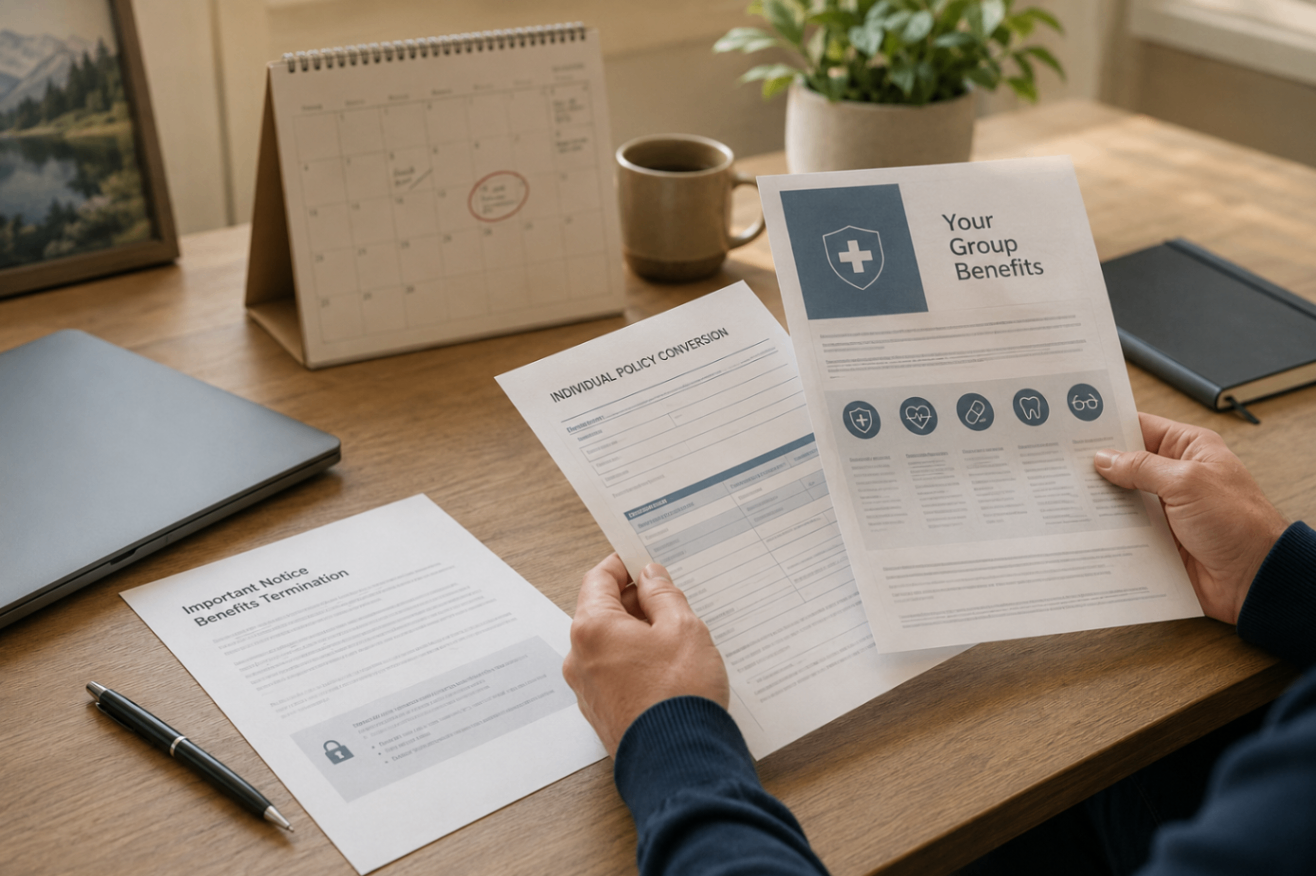
Group benefits can give you a lot while you are working. But there are also some things about them that you should know. The group benefits you get are tied to your job. This means if you leave your job or lose it, you might lose these group benefits right away. Because of this, you may not have cover when you need it most.
Group insurance does not give you much room to make the plan your own. It uses a one-size-fits-all method, so you can’t pick and choose what you want for your needs. Knowing these limits is important. It will help you build a strong safety net for your family and their future.
The biggest problem with group benefits is that your coverage will not last forever. Most of the time, when you leave your job—for example, if you quit, get laid off, or retire—your group health insurance and life insurance will stop. So, your group benefits are only there as long as you keep working at the same place.
This is a big risk. There may come a time when you need life insurance, but you don't have it. If you get sick while you are at your job, you may have trouble getting a new life insurance plan after you quit. It could also be much more costly.
If you count only on your group benefits from work, your family's money safety depends on you keeping your job. That can put you in a risky spot. If you have your own plan outside of work, you get to keep your coverage no matter what happens at your job.
Another main drawback of group insurance is that there is not much flexibility. These insurance plans are made by both the insurance provider and your boss. They are meant to be the same for all employees. Most of the time, you cannot change your coverage to fit what you need.
Some employers let you buy a bit more coverage through the group plan. You pay an extra cost for this. But, the coverage you get is often small. It might not be enough to cover everything you need.
You usually can not change the main parts of the plan, such as:
When you leave your job, you might be able to turn your group life insurance into an individual insurance policy. This is called portability. It lets you keep your life insurance coverage so there will not be a break in your plan. But not every group plan gives you this option.
If your plan has options to transfer or keep your coverage, you need to move fast. There is often a set time limit. This is usually 30 to 60 days after you stop working. You have to apply for the change within this time. If you miss this time, you will lose the chance to keep or convert your coverage.
Converting your policy can help if you have health issues and you may not get a new individual policy. This choice guarantees you can keep your coverage. But the converted policy will likely cost more money, and it may have terms that are not the same as your group plan.
One good thing about changing your group insurance is you usually do not need to show new medical records. So, you can have an individual policy with the insurance provider even if your health is different from when you first started your group plan. The company must give you a policy, and they do not have to check your health again.
But there is a cost for this easy process. The payments for these changed policies are often much higher than a new policy that an insurance company gives after checking your health. The insurance company takes on more risk since they cover you without a checkup.
When you think about conversion, there are some things you need to remember:
It is important to know how the financial side of your group benefits plan works. The cost of group benefits is usually split between you and your employer. This helps make it more affordable for you to get coverage. Also, the claims process is made to be easy to follow.
From an employer's view, picking a group benefits plan means looking at what it costs. You also have to think about how it helps to get and keep good people in your company. Let's see how these things work together for group benefits.
One good thing about group benefits is that your employer pays for a big part of the cost. The employer contributions count as a business expense for the company. In most of Canada, except Quebec, these do not count as a taxable benefit for you. This way, it is a cost-effective way to get insurance.
The amount that you pay will depend on how your company shares costs. Some companies pay all of the premiums. Others will split it in half with you or use a different split. If there is any additional cost when you add family members or buy extra coverage, the money is taken right out of your paycheck.
Even if you pay part of the cost, group insurance is usually less expensive than getting your own plan. This is because the risk for the insurance company is shared among a group of people. When more people join, each person pays less. This way of sharing risk helps keep the price lower for all.
Making a claim for your group benefits plan should be easy. Many insurance companies now use online portals or mobile apps, which helps make the process smooth. If you need help, you can ask your HR department or the person who manages your plan. They will give you the forms you need and show you what to do.
For life insurance claims, your loved one has to get in touch with the insurance company. They need to give a death certificate and fill out a claim form. The customer service team will help them with the steps, and make this time easy to get through.
For other benefits, the process is even simpler:
To sum up, group benefits insurance from your job can be a good safety net. But it usually does not cover all your money needs. A normal group benefits plan may give you life insurance of about 1 or 2 times your yearly income. This money might only last your family a short time if something happens to you. When you think about your needs, remember that a house loan, child care, and daily costs can rise quickly. You need to look at your own life and see if you should get more life insurance for your family’s safety in the future. If you have any questions or want help thinking about your options, feel free to reach out. Acting now can help you and your family feel safe later.

Cindy David, CFP, CLU, FEA, TEP, is President & Estate Planning Advisor at Cindy David Financial Group Ltd. in Vancouver. A recognized leader in wealth management and estate planning, Cindy guides clients with strategic, tax-effective solutions while championing innovation and women’s leadership in the financial industry. She is the former Chair of the Conference for Advanced Life Underwriting (CALU) — Canada’s professional association for senior life insurance and financial advisors that advances education, advocacy, and best practices in advanced planning and public policy.


