


Life insurance sounds complicated until you put it next to the actual question it answers: if your paycheque stopped coming in tomorrow, what would your family do about the mortgage, the daycare, and the next twenty years of bills?
A Canadian life insurance policy pays a tax-free lump sum directly to your named beneficiary, bypassing probate and giving them the cash they need to keep the household running.
The real decisions are which type of policy fits your situation, how much coverage is enough, and how to lock in the lowest rate while you are still young and healthy. This guide walks through all three.

Personal life insurance is an agreement with a company where you pay money, and the company gives money to your family when you die. If you are a Canadian resident, you can choose an insurance policy that gives your loved ones a large payment. This payout will help them pay for bills, such as mortgage payments, and take care of their daily needs.
There are many personal life insurance options in Canada. The main choices are term and permanent plans. Every insurance policy is made for different needs and money plans, so it's a good idea to look at each and find what works best for you.
Life insurance is not just another insurance policy. It gives financial protection to the people you love. If you pass away, your family loses not only you but also your income. A life insurance policy gives them a safety net, so they can pay their bills and don’t have to worry about money.
The money from a life insurance policy covers many costs. One big use is funeral expenses. These costs can be high when someone passes away. The payout from your life insurance policy can also help replace lost income. This helps your family stay in their home and keep living the way they did before.
With an insurance policy like this, your loved ones are less likely to face hard choices about money. You help make sure their future is safe. You give them peace of mind, because you know they will have support. Deciding when to buy life insurance is something every family should think about.
If you have people who count on you for money, you should think about getting a personal life insurance plan. It is not just something for parents or people who own a home. It is for anyone who wants their loved ones to have financial security. If you were not here, would your family have trouble paying the bills?
Look at your own situation. A payout from life insurance coverage can help your family deal with big payments they may not be able to pay without your own income. This can help them get through something hard and make things better for them.
Get a plan if you:

When you start to look for personal life insurance, you will find there are two main types of life insurance. These are term life and permanent life insurance. They are made to fit different needs and money goals, so it is important to know the basics. This helps you choose the right plan for your family.
A good insurance company will help you go over the choices. Term life gives you cover for a set number of years. On the other hand, permanent life insurance is meant to cover you for your whole life. Below, we will talk about the types of life insurance, such as whole life and universal life. You will get an idea about how each one works.
Term life insurance is a simple and often less expensive way to get coverage. Canadian term policies most commonly run for 10, 20, or 30 years. Several major carriers (Sun Life, Co-operators, PolicyMe, Blue Cross Life) also offer 5, 15, 25, 40, and even 50-year terms, letting you align coverage to a specific obligation such as a mortgage amortization.
In this time, you pay premium payments on a regular basis. If you die during the term, the people your insurance is for will get a death benefit. They won’t have to pay any tax on this money. Many people use term life to cover costs that don’t last forever, like a mortgage or taking care of kids.
When the term ends, the policy will finish. You can renew the term if you want, but the price for premium payments will likely be higher since you will be older. You need to know that term life insurance does not grow cash value for you.
Key points about term life insurance include:
Whole life insurance is a kind of permanent life insurance. It gives you lifetime coverage. If you pay your premium payments, the policy stays active. There is a payout for your beneficiaries when you pass away. Unlike term insurance or term life, this policy does not run out. That makes it good for long-term planning.
With whole life insurance, you also get a cash value that grows over time. Cash value inside a whole life policy grows on a tax-sheltered basis while it stays in the policy.
The CRA uses the Adjusted Cost Basis (ACB) to determine how much of any withdrawal or surrender is taxable: amounts up to the ACB are tax-free, while amounts above it are reported as taxable income on a T5 slip.
You can take out or borrow from this cash value if you need to. But using it may affect your death benefit.
People use this type of policy for estate planning and to take care of final costs after they die. Whole life insurance premiums are usually higher than term life premiums. But you get lifetime coverage and cash value. It’s a good choice for someone who wants guaranteed, lifelong protection.
Universal life insurance is a type of permanent life insurance. It gives you more choices than whole life. This plan lets you set a death benefit plus grow some cash value. You can change your premium payments and the death benefit over time as your needs shift. Universal life insurance is a flexible permanent plan.
Part of your payments are invested in the policy. The cash value inside the plan grows without taxes. You may use this cash value to pay your premiums or you can borrow from it. But the cash value can move up and down, so you need to watch your policy to keep it working right.
Here are some features of universal life insurance:
Beyond the main types of insurance, there are other plans for special needs. For example, personal accident insurance pays you, or your family, if you get badly hurt or die in an accident. It is not the same as a life insurance policy, which will cover death from most causes.
Another thing to look at is critical illness insurance. This plan gives you a lump-sum of money if you are told you have a serious illness, like cancer or a heart attack. You can use these funds for medical bills, lost income, or anything else you need while you get better. You don’t have to take money out of your savings. For business owners, this can be part of business overhead expense insurance.
A lot of people also get group life insurance from their employer. It is a nice benefit, but the coverage is often limited and it usually stops if you leave your job. It’s a good idea to have your own insurance policy, too. This way, your family will be more protected. If you are in Canada, a business insurance advisor can help you look at all your choices.
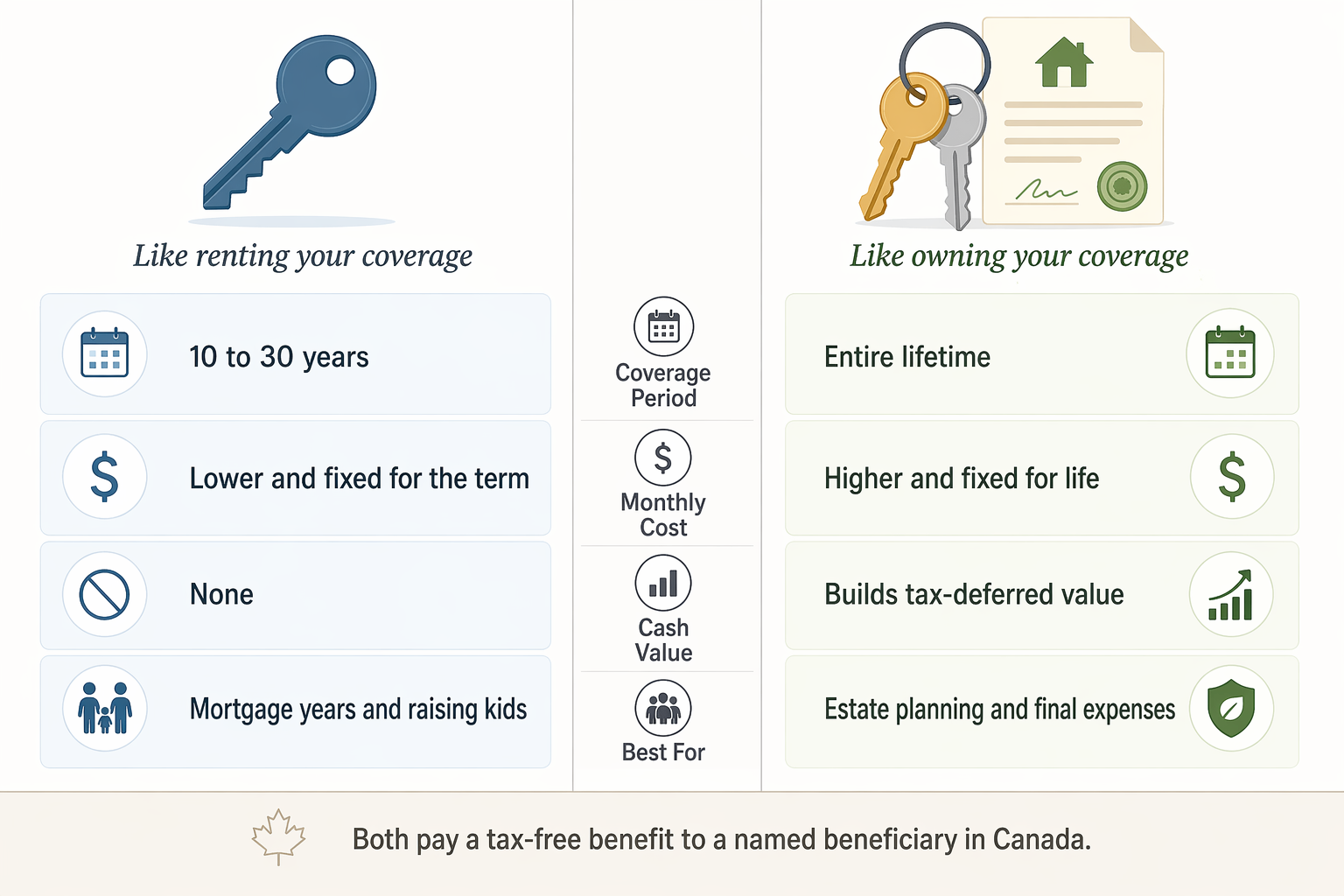
Picking between a term life policy and a whole life policy can be one of the biggest choices you make when getting life insurance. Term insurance is like renting. It costs less and covers you for a set period. Permanent insurance, like a whole life policy, is more like owning. It costs more, covers you for life, and builds value.
The best choice depends on what you have to spend, your money goals, and how long you want coverage. An insurance company can give you quotes for both. Now, let's look at how the coverage, length, and pros and cons of each type are different for Canadians.
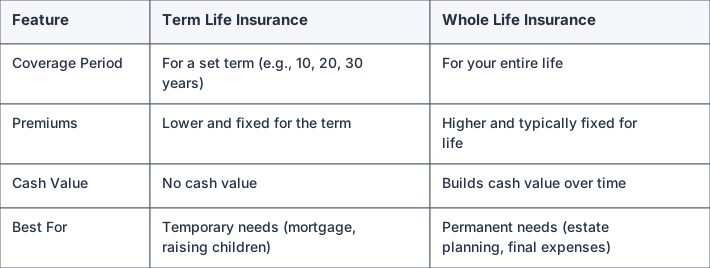
The most significant difference between term and whole life insurance lies in the policy coverage and term length. Term life insurance provides coverage for a specific period, such as 10, 20, or 30 years. If you outlive the term, the policy expires, and no death benefit is paid unless you renew it. It's designed for temporary needs.
In contrast, a whole life insurance policy is a type of permanent life insurance policy. It provides lifelong insurance coverage, guaranteeing a payout to your beneficiaries whenever you pass away, as long as premiums are paid. This makes it suitable for long-term needs like estate planning or final expenses.
Here’s a simple breakdown of the key differences:
When you think about term life or whole life insurance in Canada, you want to look at what works best for you. Term life insurance is common in Canadian life. That’s because it is easy to get and costs less. You can have a high amount of life insurance coverage for a low price. This makes it a good choice for young families or people who do not want to spend a lot.
But, term life insurance does not last forever. If you still need insurance coverage when your term is over, you will have to pay higher premiums or buy another policy. With whole life insurance, you get coverage for your whole life and it also grows cash value. Still, whole life insurance costs a lot more.
Here’s a short look at what you get:

Finding the right life insurance starts by looking at what you need for you and your family. Think about how much coverage you need and how long you want that coverage to last. A life insurance calculator can help you work out the right amount of coverage. It helps you look at how much your family might need to stay safe money-wise.
Once you know what you want, start checking plans from a good insurance company. Don't just look at the cost. Look at policy features, what people say about the company, and if the plan fits your big picture for money over time. The next parts will show you how to do this.
Figuring out how much life insurance you need is one of the most important things you do when buying it. You want to make sure that you have an amount of life insurance that covers your family’s financial needs. You do not want them to end up short if something happens to you. A common tip is to get life insurance that is about 10 times your yearly income. Still, your own situation matters more.
Start with adding up all your current and future bills. Think about the costs your family might face if you are not there. You should look at living costs, debts, and things you want for your family in the future.
To understand how much you need, think about the following:
Before you get a life insurance policy, you need to think about some important things, so you pick the best one for you. Your money situation matters. This includes your income, any debts you have, and your savings. These things will help you know what you can pay and how much coverage you need from the insurance policy.
Your health and how you live also matter a lot. Life insurance companies want to know about your health history. You may need to do a medical exam. The insurer will ask lifestyle questions, such as if you smoke, or if you have risky hobbies. Answers to these questions can change the price you pay for the life insurance policy. You must be honest in your application, so your policy stays valid.
Consider these key factors:
All these tips can help you get the right much coverage and make sure your life insurance fits what you and your family need.
Buying life insurance can be tricky, and there are mistakes that people often make. If you do not buy enough coverage for your loved ones, there is a chance their money needs may not be met later. It may look good to pick a plan with a lower amount to be able to pay less, but this could leave your family out of enough money to handle costs.
Many people end up picking the wrong type of life insurance. For example, a young family that has a home loan could use a low-cost term policy. On the other hand, someone planning for things later in life may need a permanent policy. It is important to read all the policy rules before you sign anything.
To be sure you do not make these common mistakes, remember:
Life insurance can cost more or less for different people. It helps to know what makes up your premium payments. The money you pay for life insurance depends on a few things. These include what type of policy you get, the amount of coverage you want, and how the insurance company sees your risk.
If you are young and in good health, you will usually pay less. Your premiums will be lower. In the next parts, we will look at what can change your costs, share some sample prices, and give tips for getting good coverage at a price that works for you.
Many things can change what you pay for life insurance. The insurance company looks at how risky it is to cover you. If they think you have a higher risk, you will get higher premiums. One of the biggest things that affects the rate is your age. Young people often have much lower rates.
Your health matters a lot, too. The insurance company will ask health questions and might need you to take a medical exam. They look at your health now and your family’s health history. The things you do in life can make a big difference. If you smoke or work a dangerous job, you will likely have higher premiums. If you have health problems that make it hard to get a standard policy, acceptance life insurance is an option. But this usually costs more and gives you less coverage.
Here are the main things that make your premiums go up or down:
To give you a better idea of what you might pay, let's look at some sample rates. These are just estimates, and your actual premium will depend on your unique circumstances and the insurance company you choose. The amount of coverage and your age are two of the biggest drivers of cost.
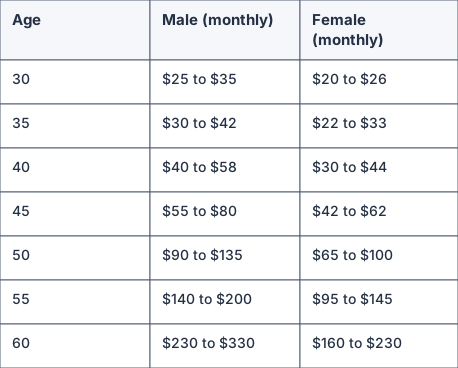
For example, a healthy 35-year-old non-smoker seeking a 20-year term policy will pay significantly less than a 50-year-old smoker for the same coverage. The table below shows estimated monthly premiums for a $500,000, 20-year term life insurance policy for healthy non-smokers.
These sample rates illustrate how much your premium can increase with age.
Finding cheap life insurance in Canada is not hard if you know how to get it. Start by looking around and compare quotes from more than one company. Do not take the first price you see. Prices can be very different from one place to another.
Use an online application. That saves you time and money. You might get a discount for applying online. Some companies will give you instant approval for some coverage amounts. If you quit smoking or make your health better, your bill will go down.
Here are a few tips to get life insurance that is more affordable:
Getting life insurance is easier now than it was before. When you start your life insurance application, you first get a quote and pick an insurance company. Many people begin with an online application. It is good because it is fast and easy.
You will be asked to give your personal details. They want to know about your health and how you live. If you need more coverage, or depending on the policy, you might have to take a medical exam. The next parts will show you each step in this process.
Getting a personal life insurance plan follows a simple process. First, you need to collect your personal details. Then, decide the type and amount of coverage that works for you. Once you know what you want, start your life insurance application with your chosen insurance company.
Many insurance companies let you finish an easy online application at home now. You will fill in some basic stuff, like your name, where you live, and your birth date. You also have to answer some health questions. The company will ask about your medical history, lifestyle, and if you have any health issues. Make sure to be honest in your answers.
Here are the main steps in the process:
It’s important to take your time with each stage. This way, you make the most of your life insurance, and you get the coverage you need for you and your loved ones.
If your life insurance company asks you to take a medical exam, do not worry about it. The process is easy, fast, and costs you nothing. A licensed medical professional will come to your home or your place of work. They will work with your schedule. This exam is like the regular checkup you may get at your doctor's office.
During this medical exam, the person will check your height, weight, and blood pressure. They will also take a small amount of your blood and ask you to give a urine sample. You will answer some health questions, which may be the same ones from your life insurance application. Their goal is to help the insurance company know about your health right now.
What to expect:
Yes, you can compare quotes online when you want to buy life insurance. You should do this before you make a choice. Using an online comparison tool is a quick and simple way to find the best price. The tool lets you see the cost from different insurance companies at the same time. This saves you both time and money. Doing this is important to find good business insurance in Canada as well.
When you compare quotes, you will need to give some basic details. The site will ask for your age, gender, the amount of life insurance coverage you want, and if you smoke or not. After you fill this in, the tool will show quotes from different providers. Do not look at price alone. You should also look at the insurance company's name and what the policy gives you.
To compare quotes well online:
The right life insurance plan is the one that matches your stage of life, your financial obligations, and the people counting on your income. Term life covers the years your family is most exposed, usually while you are paying down a mortgage and raising kids.
Whole life and universal life take over when the goal shifts toward estate planning, lifelong protection, or building tax-sheltered cash value alongside coverage. None of them is universally better. The best policy is the one priced for your age and health today, sized to your real obligations, and bought before life events make it more expensive.
The fastest way to see what you actually qualify for is to compare quotes from multiple Canadian carriers in one place instead of going carrier by carrier. Compare personalised life insurance quotes on PolicyNinja and lock in your rate while you are still in the lowest pricing band for your age.
If you end a term life insurance policy, you lose your coverage. You do not get your money back. If you have a permanent life insurance policy with cash value, you might get a "cash surrender value" after you cancel. But it could be less than what you paid in premiums. It is good to look at the terms of your insurance policy with the insurance company.
The right amount of coverage is different for everyone. You should think about any debts you have, the living costs for your family, how much income replacement they will need, and what you want for the future, like money for your children’s school. Many people say you should have about 10 times your yearly pay, but doing a deeper review will help you find the best amount of coverage for your family’s financial security.
The main benefit of the life insurance plan is to give financial protection to your family members. It helps by giving a tax-free payment that can be used to pay for funeral expenses, clear debts, and help with lost income. With this money, your loved ones can keep their way of living and not face money problems if something happens to you.
The price you pay for an insurance policy depends on a few things. Your age and gender both matter a lot. Your health history is checked too. The amount of coverage you pick changes the cost as well. The insurance company will also ask lifestyle questions like if you smoke, drink, or have hobbies. All these things help them decide how much your insurance policy will cost.
Yes, you can compare life insurance quotes from many companies online. There are tools that let you see prices for different types of life insurance. The online application is easy to use. Some people get instant approval for their plan.

Cindy David, CFP, CLU, FEA, TEP, is President & Estate Planning Advisor at Cindy David Financial Group Ltd. in Vancouver. A recognized leader in wealth management and estate planning, Cindy guides clients with strategic, tax-effective solutions while championing innovation and women’s leadership in the financial industry. She is the former Chair of the Conference for Advanced Life Underwriting (CALU) — Canada’s professional association for senior life insurance and financial advisors that advances education, advocacy, and best practices in advanced planning and public policy.


