


Choosing the right life insurance can feel like a big decision. You want to make sure your loved ones are financially protected, but where do you start? The two main options you'll encounter are term life and permanent insurance. Each one works differently and is designed for different needs. Understanding the basics of term vs. permanent life insurance is the first step toward picking the policy that gives you and your family the right kind of peace of mind.
Life insurance is a contract between you and a life insurance company. In exchange for your regular payments, the company agrees to pay a tax-free death benefit to your chosen beneficiaries if you pass away while the policy is active. Canadians are increasingly turning to these policies for financial security.
In fact, term life insurance sales grew by 40% in Canada in 2021, showing a strong preference for this type of life insurance. People often choose it for its affordability and simplicity. Let's explore how these policies function and why they are a popular choice.
At its core, a life insurance policy is a straightforward concept. You pay premiums, and in return, your beneficiaries receive a lump-sum payment, known as the death benefit, when you die. This money is typically tax-free and can be used for any purpose, from covering funeral costs to paying off a mortgage.
The main difference between various insurance products lies in their duration and features. Some policies are designed to last for a specific number of years, while others provide coverage for your entire life.
Additionally, certain types of life insurance include a savings or investment element called a cash value. This component can grow over time and may be accessible during your lifetime. Understanding these distinctions is key to selecting the right life insurance policy for your needs.
Many Canadians purchase life insurance to provide a financial safety net for their loved ones. It ensures that if the unexpected happens, their family won't have to worry about immediate financial burdens. The peace of mind that comes from knowing your family is protected is a primary motivator.
People choose life insurance coverage for various reasons, often tied to specific life stages and financial goals. An insurance company can offer a policy that aligns with these objectives, whether they are short-term or long-term.
Here are some common reasons why Canadians opt for life insurance:

Term life insurance is one of the most popular and straightforward insurance products available. It provides coverage for a specific period, or "term," such as 10, 20, or 30 years. If you pass away during this term, your beneficiaries receive a tax-free death benefit. If the policy expires and you are still living, the coverage simply ends, and no payout is made.
Because of its temporary nature, term life is generally the most affordable type of life insurance. It's designed to cover financial responsibilities that have an end date, like a mortgage or raising children. Term policies are simple, focusing purely on protection without any complex investment components. This makes them a practical choice for many families looking for cost-effective coverage.
A term life insurance policy is defined by its simplicity and fixed nature. You select a coverage amount and a term length, and your premiums are typically locked in for that set period of time. This predictability makes it easy to budget for.
When the term ends, you may have the option to renew the policy, but often at higher premiums based on your new age. Some policies also allow you to convert your term insurance into a permanent policy without needing a new medical exam.
Key features of term life insurance include:
Term life insurance is a good option for individuals and families with temporary financial protection needs. Its affordability and defined coverage period make it a practical tool for securing specific financial goals. If you have debts or dependents that will only need support for a set period of time, a term life policy is an excellent fit.
For example, young families often use term life to ensure there is enough money to replace a parent's income, pay for childcare, and fund education until their children become financially independent. It aligns perfectly with the timeline of raising a family.
Here are some common scenarios where term life insurance coverage shines:

Permanent life insurance, as the name suggests, is designed to provide coverage for your entire life, as long as you continue to pay the premiums. Unlike term insurance, it doesn't expire. This means your beneficiaries are guaranteed to receive a death benefit, no matter when you pass away. This lifelong guarantee is one of the main benefits of this type of policy.
One of the defining features of permanent life insurance policies is the cash value component. A portion of your premium payments goes into a tax-deferred savings account that grows over time. This cash value can be borrowed against or withdrawn, providing a source of funds for emergencies or other financial needs. Whole life insurance is a common type of permanent insurance that embodies these features.
Permanent life insurance offers a combination of lifelong protection and a savings component. This makes it a more complex product than term insurance but also provides additional financial tools. The guarantee of a payout, provided premiums are paid, offers a unique sense of security.
The cash value is a central feature. It grows tax-deferred, meaning you don't pay taxes on the gains as they accumulate. You can access these funds through a policy loan or withdrawal, though doing so can impact your death benefit. This savings element is funded by the higher premiums associated with permanent policies.
Key features of permanent life insurance are:
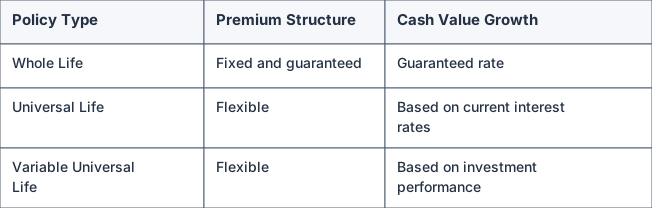
Permanent life insurance isn't a one-size-fits-all product. There are several types, each with different features related to premium flexibility and how the cash value grows. The most common permanent life insurance products are whole life insurance and universal life.
A whole life policy offers the most predictability, with fixed premiums and guaranteed cash value growth. Universal life, on the other hand, provides more flexibility. With a universal life policy, you may be able to adjust your premium payments and death benefit over time.
Other variations, like variable universal life, allow you to invest the cash value portion in sub-accounts similar to mutual funds, introducing both higher growth potential and greater risk.

When you're looking at term vs. permanent life insurance, the main difference comes down to two things: how long the coverage lasts and how much it costs. Term life insurance is temporary and affordable, designed for needs that have an endpoint. Permanent life insurance is for life and includes a savings element, making it more expensive.
Both types of life insurance can offer a wide range of coverage amounts, so you can tailor either policy to fit your specific financial protection needs. The right choice for you will depend on your budget, your financial goals, and how long you need the coverage to last.
The fundamental main difference between term life and permanent life insurance is the duration of coverage. Term life covers you for a specific period, while permanent life provides lifelong coverage. This core distinction leads to several other key differences in how the policies function and what they offer.
Premium payments also vary significantly. Term life has lower, fixed premiums for the policy's term. Permanent life has much higher premium payments because it guarantees a death benefit and includes a cash value component.
Here’s a quick summary of the key differences:
When choosing a life insurance policy, you'll need to decide on two main factors: the coverage amount and the duration. The coverage amount is the sum of money your beneficiaries will receive. This amount should be large enough to cover your debts, replace your income, and meet your family's future financial needs.
For term policies, you also select a duration, which is the period of time the policy will be in effect, such as 10, 20, or 30 years. This term should align with the length of your financial obligations. For example, if you have 25 years left on your mortgage, a 30-year term might be appropriate.
With permanent policies, the duration is your entire life, so the primary decision is the coverage amount. Both term and permanent policies offer a wide range of coverage amounts, allowing you to customize your protection to match your personal circumstances.
Understanding the costs is crucial when comparing life insurance options. Life insurance costs are primarily determined by your monthly or annual life insurance premiums. Generally, term life insurance is far more affordable than permanent life insurance for the same amount of coverage.
The reason for the price difference is simple: permanent life insurance guarantees a payout and includes a cash value savings feature, which results in much higher premiums. We'll now look at what influences these premiums and how you can find affordable options.
Several factors determine the cost of your premium payments. Insurance companies assess your risk level—the likelihood they will have to pay out a claim—and set your rates accordingly. Your age and health are the most significant factors, which is why a medical exam is often part of the application process.
The policy itself also plays a big role in the cost. Larger coverage amounts will naturally lead to higher premiums. Similarly, the type of policy you choose has a major impact. Permanent life insurance premiums are significantly higher because they fund both the death benefit and the policy's cash value.
Here are the key factors that influence your premiums:
Finding affordable life insurance in Canada is possible, especially if you know what to look for. For most people, term policies offer the best combination of robust coverage and budget-friendly pricing. Since they don't include a costly savings component, you get the pure protection you need at a fraction of the cost of permanent policies.
Shopping around and comparing quotes from a reputable life insurance company is a good idea. Prices can vary between providers, so doing your homework can lead to significant savings. Don't be afraid to explore the different types of policies available to find the one that best fits your budget.
Ultimately, the most affordable life insurance is the one that meets your needs without straining your finances. For many Canadian families, this means choosing a term policy to protect their most financially vulnerable years.
The choice between term life and permanent life insurance really comes down to your personal circumstances and financial goals. There's no single "best" answer; the right type of policy is the one that aligns with your needs. If your main concern is covering temporary debts and protecting your family during your working years, term life is often a good option.
If you have lifelong financial dependents or complex estate planning needs, permanent life might be worth considering. Let's dig into the factors you should evaluate to make an informed decision.
Your personal situation is unique, and your life insurance should reflect that. Before choosing a policy, take a close look at your financial goals, your current stage of life, and your long-term plans. Are you just starting a family, or are you an empty nester planning for retirement? The answer will heavily influence your insurance needs.
Think about the value of your assets and liabilities. The goal of life insurance is to fill a financial gap, so understanding the size of that gap is essential. Also, consider your comfort level with different investment options, as this can affect whether a policy with a cash value component is right for you.
Here are some factors to consider:
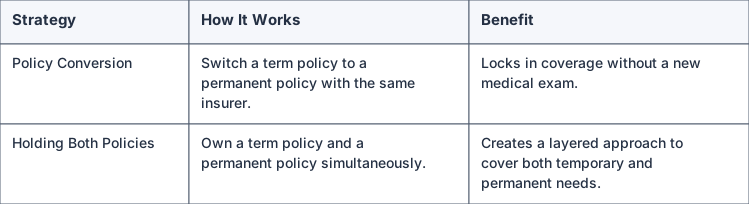
Yes, you have options for both combining and converting policies, which can provide greater flexibility as your needs change over time. Many term life insurance policies come with a conversion feature. This allows you to convert your term policy into a permanent life insurance policy without having to undergo a new medical exam. This is a valuable option if your health changes or your financial needs become permanent.
It is also possible to own both term and permanent life insurance policies at the same time. This strategy can be useful for covering different needs. For example, you could have a large term policy to cover your mortgage and income replacement needs while your children are young, and a smaller permanent policy for final expenses and leaving a small inheritance.
Here's how these options provide flexibility:
The choice between term and permanent life insurance comes down to two things: how long you need coverage, and how much you can afford to pay for it. Term life works for most Canadian families because it covers the years that matter most, raising kids, paying off the mortgage, building retirement savings, at a price that fits the average household budget. Permanent life makes sense in narrower situations, like estate planning, lifelong dependents, or when you have already maxed out your registered accounts and want another tax-advantaged way to grow wealth.
You do not have to figure this out alone, and you should not have to pay for help either. Get a free, no-obligation life insurance quote from PolicyNinja and compare term and permanent policies from Canada's top insurers side by side. It takes a few minutes, there is no medical exam to start, and a licensed Canadian advisor will walk you through your options if you want a second opinion. Your family's protection should not wait.
Yes, permanent life insurance offers tax advantages. The cash value or savings component of the policy grows on a tax-deferred basis, meaning you don't pay taxes on the gains as they accumulate. This feature is common across types of life insurance like whole life insurance and can be a useful long-term financial planning tool.
For both term and permanent life insurance, the policy pays a tax-free death benefit to your beneficiaries if you pass away while the coverage is active. With term life insurance, this only happens if you die during the policy’s term. With permanent life insurance, the payout is guaranteed whenever you die, as long as premiums are paid.
Yes, you can absolutely have both term and permanent life insurance policies. This can be a smart investment strategy, allowing you to layer your coverage. You can use a term policy for large, temporary needs and a permanent policy for smaller, lifelong needs, ensuring you're covered for the rest of your life.

Cindy David, CFP, CLU, FEA, TEP, is President & Estate Planning Advisor at Cindy David Financial Group Ltd. in Vancouver. A recognized leader in wealth management and estate planning, Cindy guides clients with strategic, tax-effective solutions while championing innovation and women’s leadership in the financial industry. She is the former Chair of the Conference for Advanced Life Underwriting (CALU) — Canada’s professional association for senior life insurance and financial advisors that advances education, advocacy, and best practices in advanced planning and public policy.


